

SMS is easy to launch, yet it’s harder to measure well. You can send a campaign in minutes; however, proving ROI takes discipline. Therefore, the best SMS programs treat measurement like a system: they track the right KPIs, define them consistently, and validate lift rather than assume it.
Moreover, SMS can look amazing on surface metrics while quietly losing money. For example, a big discount can inflate revenue attribution but shrink profit. Meanwhile, a “high CTR” campaign can still underperform if the landing page or checkout creates friction. Consequently, you need a measurement stack that connects engagement to outcomes, and outcomes to long-term value.
This guide breaks down SMS ROI measurement into four core metrics—CTR, reply rate, conversions, and LTV—then shows you how to turn them into a defensible ROI story your team can trust.
Start With A Simple SMS ROI Model
Before you track anything, define “ROI” clearly. Otherwise, teams argue about attribution while the business asks a simpler question: “Did this make us money?”
A clean ROI model looks like this:
SMS ROI (%) = (Incremental Profit – SMS Program Cost) ÷ SMS Program Cost × 100
Additionally, “program cost” should include more than message fees:
- platform fees and messaging costs
- labor (creative, segmentation, reporting, support time for two-way programs)
- incentive cost (margin you gave up via discounts)
- any incremental tooling needed for tracking
Now, because ROI depends on “incremental profit,” you must separate what happened because of SMS from what would have happened anyway. We’ll cover that later with holdouts. For now, let’s build the KPI stack that feeds the ROI model.
The KPI Hierarchy That Keeps Your Reporting Honest
SMS performance becomes clearer when you track metrics in layers. Therefore, use this hierarchy:
- Deliverability (did it reach the phone?)
- Engagement (did they interact?)
- Conversion (did they complete the goal?)
- Value (did you earn meaningful revenue/profit?)
- Retention (did it increase repeat behavior and LTV?)
This hierarchy prevents a common mistake: optimizing for CTR while conversions or LTV decline.
CTR: The Click-Through Rate That Signals Message Relevance
CTR tells you whether the message earned an action. However, CTR alone doesn’t prove ROI. Still, CTR acts like a “top-of-funnel” indicator for your SMS content and targeting.
How To Define CTR Consistently
Define CTR as: CTR = Unique Clickers ÷ Total Recipients
Klaviyo’s 2025 benchmark report uses a similar definition for click rate (clicks divided by total recipients) and notes it excludes bot clicks in reporting, which improves data quality.
Also, keep the definition consistent across campaigns and flows. Otherwise, you’ll compare apples to oranges.
CTR Benchmarks To Use As Guardrails
Benchmarks vary by industry, list health, and message type. Still, they help you spot underperformance quickly.
- SimpleTexting reports that, in 2025, most businesses have an average SMS CTR of 21% to35%.
- Omnisend also cites an average SMS CTR of 21% to 35%, noting that some industries can achieve higher rates.
Consequently, if your CTR is far below that band, fix relevance and timing before adding discounts.
What To Do When CTR Drops
If CTR drops, diagnose in this order:
- tighten segments (intent-based audiences first)
- adjust timing (send windows and trigger delays)
- simplify the CTA (one message, one action)
- improve trust signals (brand clarity, clean links)
Additionally, check whether link deliverability changed, because filtering or suspicious link domains can reduce clicks without changing audience intent.
Reply Rate: The KPI That Reveals Purchase Friction And Intent
Reply rate matters most for two-way SMS programs. Moreover, replies often signal higher intent than clicks, because the customer chooses to engage directly.
How To Calculate Reply Rate
Use this simple definition: Reply Rate = Unique Repliers ÷ Total Recipients
Then track reply intent, not just volume. For example, “SIZE” and “SHIPPING” replies indicate purchase blockers, while “STOP” indicates fatigue or a mismatch.
Why Reply Rate Predicts Revenue
Replies do two valuable things:
- They expose the exact reason customers hesitate.
- They create a fast path to resolution, which often converts without discounting.
Therefore, a “help-first” two-way flow can outperform a promo-heavy flow even when CTR looks similar.
What To Do When Reply Rate Rises But Conversions Don’t
If replies rise but conversions don’t, your team likely needs better routing:
- reduce menu options to 3–5 choices
- add faster handoff to a human for complex questions
- create macros for top questions (shipping, sizing, pricing, availability)
Consequently, you turn replies into outcomes instead of long chats.
Conversions: The Outcome KPI That Proves The Channel Works

Conversions tie SMS activity to business goals. However, conversion reporting often becomes messy because attribution rules differ across tools.
Choose A Conversion Definition That Matches The Goal
Use one of these definitions, depending on what you sell:
- Purchase conversion: orders ÷ recipients (within a set window)
- Booking conversion: appointments booked ÷ recipients
- Payment conversion: invoices paid ÷ recipients
- Lead conversion: qualified leads ÷ recipients
Then, track conversion rate and conversion value.
Use Revenue Per Recipient To Keep It Comparable
The conversion rate alone can be misleading, especially when AOV varies. Therefore, pair conversion rate with:
Revenue Per Recipient (RPR) = Attributed Revenue ÷ Total Recipients
RPR helps you compare:
- segment A vs segment B
- message 1 vs message 2 in a flow
- campaigns vs automations
Benchmarks: Use Them Carefully
Benchmarks help you sanity-check, yet they don’t replace your baseline. Instead, use benchmarks to detect “something broke” and then use your own trendlines to optimize.
Klaviyo publishes SMS benchmarks by industry, which helps you compare performance by vertical rather than guessing based on generic averages.
However, conversion benchmarks shift wildly by offer strength, funnel quality, and intent level. So, focus on internal comparisons first: week-over-week, segment-over-segment, and flow-step-over-flow-step.
LTV: The Metric That Turns SMS From A Tactic Into A Growth Engine
Short-term ROI can look strong while LTV weakens. Therefore, you must track whether SMS increases retention and customer lifetime value.
What LTV Means For SMS Measurement
LTV answers: “How much value does this customer produce over time?” When SMS works well, it can:
- increase repeat purchase frequency
- increase retention duration
- increase AOV via upsells and replenishment
- reduce churn through service recovery and reminders
So, your SMS program should aim to lift LTV, not just single-order revenue.
How To Measure SMS Impact On LTV
Start with practical LTV measurements:
- Repeat purchase rate within 30/60/90 days
- Orders per customer per quarter
- Revenue per customer over a rolling window (e.g., 90 days)
- Subscription renewal rate (if applicable)
Then compare:
- subscribers vs non-subscribers
- engaged SMS subscribers vs unengaged subscribers
- customers exposed to specific flows vs holdout groups
Because LTV takes time, use leading retention indicators early, then validate with longer windows.
The Missing Piece: Incrementality And Holdout Testing
Attribution credits the last touch; incrementality measures true lift. Therefore, when you want a defensible ROI number, add holdouts.
Holdout testing measures incremental lift by withholding messages from a control group and comparing outcomes with those of a test group.
Similarly, incrementality testing compares a test group that sees marketing against a control group that doesn’t, and the difference reflects incremental impact.
A Simple Holdout Plan For SMS
You don’t need perfect experimentation to get value. Instead, run a practical holdout:
- Choose one workflow (cart recovery, win-back, replenishment, or loyalty).
- Hold out 5–10% of eligible users for 2–4 weeks.
- Compare the conversion rate and profit per recipient between groups.
- Use the difference as an incremental lift.
Then plug incremental profit into your ROI formula. Consequently, your SMS ROI becomes credible even when attribution gets noisy.
What To Track By Campaign vs Flow
SMS programs include campaigns (broadcasts) and flows (automations). Therefore, you should report them separately.
Campaign Reporting
Campaign success depends on audience quality and the relevance of the offer. Track:
- CTR and conversion rate by segment
- RPR by segment
- opt-out rate per campaign
- profit impact (especially with discounts)
Flow Reporting
Flow success depends on timing, relevance, and step design. Track:
- performance by step (message 1 vs message 2 vs message 3)
- delay tests (60 minutes vs 90 minutes)
- reply-based resolution metrics (for two-way flows)
- holdout lift when possible
Also, keep click definitions consistent. Klaviyo’s benchmark report emphasizes click rate as clicks divided by total recipients and excludes bot clicks, which helps keep comparisons clean.
A Practical Dashboard: The “SMS ROI Scorecard”
If you want a dashboard that stays clean and useful, use this scorecard:
- Deliverability: delivery rate
- Engagement: CTR, reply rate
- Outcome: conversion rate, RPR
- Value: profit per recipient (margin-aware)
- Retention: repeat purchase rate (30/60/90 days)
- Trust: opt-out rate and complaint indicators (if available)
- Truth check: holdout lift for at least one core workflow
This set avoids vanity metrics and keeps the focus on profit and retention.
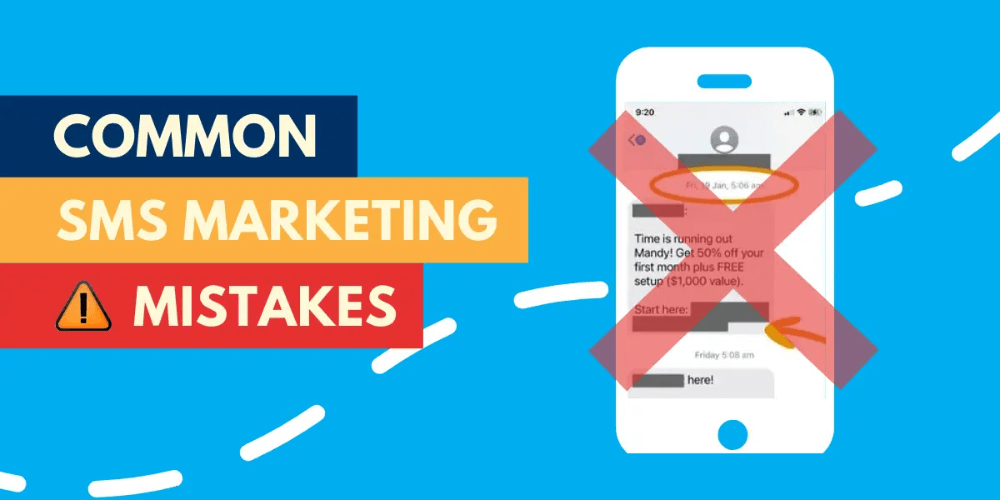
Common Mistakes That Inflate ROI Or Hide Problems
SMS ROI reporting often fails due to predictable mistakes. Therefore, watch for these:
- Counting revenue without subtracting discount cost
- Using inconsistent attribution windows across flows
- Optimizing CTR while ignoring opt-outs and list health
- Treating attribution as incrementality
- Measuring only campaigns and ignoring flows (or the reverse)
Additionally, don’t rely on open rates as a primary KPI. Modern reporting increasingly treats clicks and conversions as more reliable than opens, and many benchmark reports prioritize click definitions accordingly.
Final Thoughts
SMS ROI becomes simple when you track the metrics that actually drive profit. Therefore, measure CTR to confirm relevance, measure reply rate to uncover friction, measure conversions to prove outcomes, and measure LTV to capture long-term value.
Then, add holdouts to validate incremental lift, because that’s where “ROI” becomes real.