
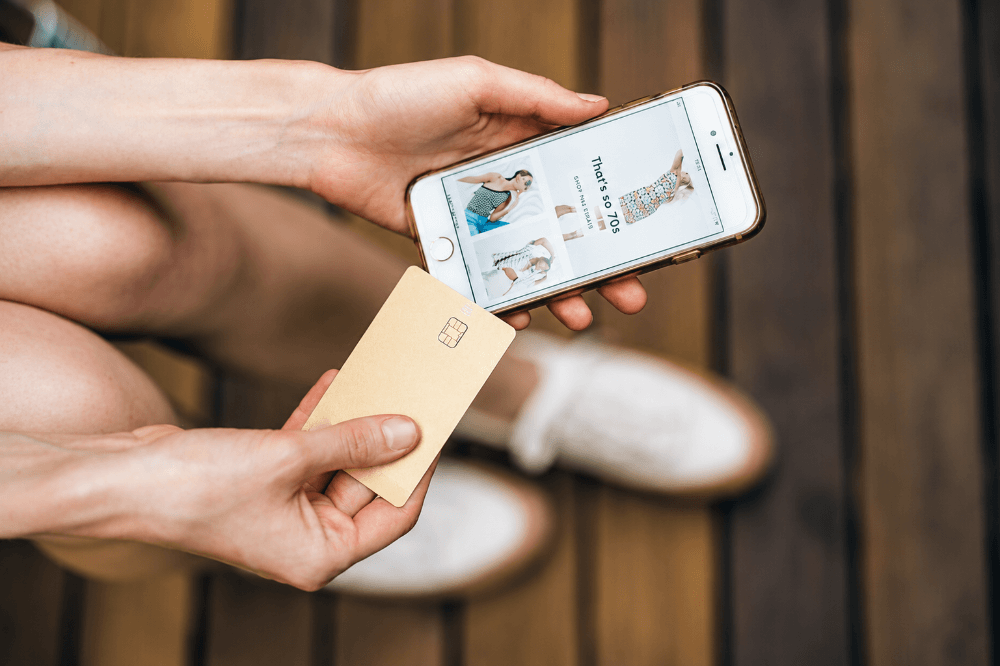
Every extra step between a customer and payment creates another opportunity to lose the sale.
A customer may need to find an invoice email, remember a password, navigate a billing portal, enter payment details, and then return to the business website. Text-to-pay simplifies that journey by placing a secure payment link directly inside an SMS conversation.
The customer taps the link, opens a mobile-friendly checkout, chooses a payment method, and completes the transaction.
As a result, businesses can use SMS not only to remind customers that money is due but also to give them an immediate way to act. Text-to-pay can support invoices, deposits, account balances, appointments, ecommerce orders, subscriptions, and other payment journeys.
The real advantage, however, comes from reducing friction when customers are ready to pay.
What Is Text-to-Pay?
Text-to-pay is a payment process in which a business sends a customer an SMS containing a secure link to a digital checkout page.
Stripe defines text-to-pay similarly: the business sends a bill or payment request through text, and the customer completes payment from their mobile device through a secure payment interface.
A Basic Text-to-pay Journey Looks Like This:
- The business creates an invoice or payment request.
- The system generates a secure payment link.
- The customer receives the link through SMS.
- The customer taps it.
- A mobile checkout opens.
- The customer chooses an available payment method.
- The payment processor confirms the transaction.
- The business updates the invoice or customer record.
Therefore, SMS acts as the delivery channel rather than the place where businesses collect sensitive card information.
Why Text-to-Pay Can Increase Conversions
Text-to-pay removes several common payment barriers.
Suppose a customer receives an invoice by email while away from their computer. They may intend to pay later but forget.
An SMS message can instead say:
“Example Dental: Your balance of $85 is due Friday. Pay securely here: [payment link].”
The customer can tap the link immediately and complete the payment on the same device.
That convenience matters because payment intent can disappear quickly.
Text-to-pay Can Reduce Friction by Removing the Need to:
- Search through email
- Call the business
- Visit a physical location
- Log into an account portal
- Type a complicated website address
- Manually enter invoice details
As a result, the path from reminder to payment becomes much shorter.
Payment Links Turn SMS Into a Checkout Entry Point
Payment links make text-to-pay possible without putting payment processing directly in the SMS.
A payment link opens a secure checkout page that can support cards and, depending on the provider and configuration, other payment methods.
Stripe Payment Links, for example, can be shared through SMS, email, or other channels and can support one-time and recurring payments.
Therefore, even businesses without a sophisticated e-commerce website can create a payment experience and distribute it through text.
This Approach Can Work Particularly Well for:
- Service businesses
- Medical and dental offices
- Contractors
- Auto repair shops
- Property managers
- Membership organizations
- Professional services
- Education providers
- Subscription businesses
The payment page handles checkout, while SMS takes the customer directly there.
Mobile Wallets Can Reduce Friction Further
Typing a full card number on a phone can still create friction.
So text-to-pay works best when checkout supports fast payment methods such as stored payment credentials or digital wallets.
Stripe’s Link, for example, can autofill saved customer payment details across supported checkout experiences, which reduces the information customers need to type manually. Stripe says Link users can complete checkout considerably faster than customers using a standard checkout flow.
The broader principle matters regardless of provider:
Fewer payment fields usually create a smoother mobile experience.
A Well-designed Text-to-pay Checkout Should Therefore:
- Load quickly
- Fit mobile screens
- Display the business clearly
- Show the correct amount
- Support convenient payment options
- Require as few steps as practical
Consequently, businesses should optimize the payment page as carefully as the SMS that sends customers there.
Text-to-Pay Is Useful for More Than Ecommerce
Text-to-pay often gets associated with online shopping. However, its strongest use cases often involve payments that happen after a service or customer interaction.
| Business Type | Possible Text-to-Pay Use |
|---|---|
| Dental clinic | Outstanding patient balance |
| Contractor | Project deposit |
| Auto repair shop | Completed repair invoice |
| Property manager | Rent or fee reminder |
| Consultant | Service invoice |
| Gym | Membership renewal |
| School | Activity or program fee |
| Retailer | Direct product payment |
For example, a plumber can finish a job and immediately text the customer a secure payment request.
Meanwhile, an appointment-based business can request a deposit before confirming a booking.
Therefore, text-to-pay connects particularly well with industries where customers already communicate with the business by phone or SMS.
Automated SMS Reminders Can Improve Collections
Sending one payment request may not be enough.
Customers forget. Cards fail. Invoices get overlooked.
Therefore, businesses can combine text-to-pay with automated payment reminders.
A simple sequence could look like this:
- Three days before due date: Friendly reminder with payment link.
- Due date: Short message confirming the amount is due.
- Three days overdue: Follow-up with the same secure payment option.
- After payment: Confirmation and immediate removal from the reminder workflow.
Stripe also describes automated payment reminders as one way businesses can incorporate text-to-pay into billing processes.
This automation can reduce the manual work of chasing overdue invoices.
However, businesses should stop reminders as soon as payment arrives. Nothing undermines confidence faster than asking a customer to pay an invoice they already settled.
Text-to-Pay Works Well With Two-Way SMS
Payments often generate questions.
A customer may reply:
- “What’s this charge for?”
- “Can I pay tomorrow?”
- “Can I use a different card?”
- “Is this deposit refundable?”
Therefore, businesses gain more value when a text-to-pay system supports two-way communication.
Instead of forcing customers to call another department, an employee or AI assistant can answer the question inside the same SMS thread.
For Example:
Business: “Your $120 invoice is ready. Pay securely here: [link].”
Customer: “Can I split this into two payments?”
Business: “Yes. We can send you two separate payment links.”
Consequently, conversational SMS can help remove objections that would otherwise prevent payment.
AI Agents Can Make Payment Journeys More Responsive
AI agents can add another layer of automation.
An agent could identify common billing questions, retrieve invoice status, explain what a charge relates to, and send an approved payment link.
For Example:
Customer: “How much do I still owe?”
The AI system checks the account and responds:
“Your remaining balance is $75. You can pay securely here: [link].”
Additionally, AI could identify whether a customer has already paid and automatically stop the reminder workflow.
However, businesses should place strict boundaries around financial actions. AI agents should only access the data and tools required for approved tasks, and sensitive changes may require authentication or human review.
Security Is Essential for SMS Payments
Businesses should never ask customers to send complete card numbers or other sensitive payment credentials through normal SMS.
Instead, the message should direct customers to a secure payment environment run by a properly configured payment processor.
Using hosted payment pages can also reduce the amount of sensitive payment data that passes through the business’s own systems.
For example, Stripe states that its Link service encrypts customer data and operates as a PCI Service Provider Level 1.
Businesses Should Also Follow Several Practical Security Principles:
- Use recognizable domains.
- Clearly identify the business.
- Avoid suspicious link shorteners.
- Show the amount or invoice reference when appropriate.
- Never request card numbers by text.
- Protect account access.
- Authenticate customers before exposing sensitive account information.
- Monitor for fraudulent payment requests.
Trust directly affects conversion. A customer who doubts the link’s legitimacy will not click it.
SMS Consent Still Matters
A payment-related text does not exempt you from messaging rules.
Businesses need an appropriate basis to send SMS and should distinguish transactional payment communication from promotional marketing.
For example, a customer who provides a phone number for an invoice may reasonably expect a relevant payment reminder. However, that does not automatically mean the company should add the same number to promotional campaigns.
Therefore, businesses should carefully track consent and the purpose of communication.
Additionally, texts should identify the sender clearly so customers know who is requesting payment.
Avoid Overusing Payment Reminders
Text-to-pay should create convenience, not pressure.
Sending repeated reminders several times per day can frustrate customers and increase opt-outs or complaints.
Instead, Businesses Should Design Reminders Around:
- Due date
- Payment status
- Account type
- Customer relationship
- Previous reminders
- Legal requirements
The tone should also change gradually.
An early reminder can stay friendly. An overdue notice can become more direct. However, businesses should avoid threatening language unless a real and appropriately disclosed consequence exists.
Measure More Than Clicks
A payment link click does not necessarily mean a successful payment.
Therefore, marketers and billing teams should measure the complete funnel.
Useful Text-to-pay Metrics Include:
- SMS delivery rate
- Payment-link click rate
- Checkout completion rate
- Time to payment
- Payment conversion rate
- Failed payment rate
- Revenue collected
- Reminder-to-payment rate
- Customer reply rate
- Opt-out rate
For Example, Imagine 1,000 Customers Receive a Payment Text:
- 950 messages reach customers.
- 500 customers click.
- 400 complete payment.
The click rate provides useful information, but the payment completion rate matters more.
Teams can then identify where customers drop out.
If many people click but few complete checkout, the problem may lie with the payment page rather than SMS.
Text-to-Pay Can Support Abandoned Checkout Recovery
Text-to-pay can also support customers who already intended to purchase but failed to complete checkout.
Suppose someone speaks with a salesperson and agrees to buy a service.
Instead of saying: “Visit our website later and search for the package,” the representative can send a direct payment link.
Similarly, an SMS agent could generate an approved checkout link after helping a customer choose a product.
The journey becomes:
Conversation → Decision → Payment link → Checkout
As a result, businesses reduce the distance between customer intent and transaction.
Best Practices for Text-to-Pay
A strong text-to-pay strategy should remain simple.
Businesses should:
- Identify the business clearly.
- State why payment is requested.
- Include the correct amount when appropriate.
- Use a trusted payment domain.
- Optimize checkout for mobile.
- Support fast payment methods.
- Automate sensible reminders.
- Stop reminders immediately after payment.
- Allow customers to ask questions.
- Protect sensitive data.
- Track consent and communication purpose.
- Measure completed payments, not clicks alone.
Most importantly, customers should always understand where the link will take them and why they received it.
The Biggest Advantage Is Less Friction
Text-to-pay does not fundamentally change how payment processing works.
Instead, it changes how easily customers reach the payment step.
A secure checkout that requires ten minutes to find creates friction. The same checkout, delivered through a timely SMS link, may take seconds to access.
Stripe’s current text-to-pay guidance highlights this same core benefit: businesses can combine billing and mobile payment into a simpler customer experience.
Therefore, businesses should think of SMS payments as part of the broader customer journey, not just another payment method.
SMS provides immediacy. Payment links provide a secure path to checkout. Automation provides timely reminders. Meanwhile, conversational support can resolve questions before they become lost transactions.
Ultimately, text-to-pay can increase conversions because it lets customers act while their intent is still strong.
The easier businesses make it to move from “I need to pay” to “payment complete,” the more valuable SMS becomes as a revenue and customer-service channel.