

E-commerce brands spend a lot of time and money creating demand. They run ads, build email lists, post on social media, and invest in product launches. However, demand alone does not guarantee revenue. Shoppers often arrive at a product page, want the item, and then hit a dead end because the product is out of stock or not yet available.
That is exactly why back-in-stock and product drop alerts matter. More importantly, that is why SMS has become one of the strongest channels for both.
Text messaging helps brands reach interested shoppers at the exact moment inventory returns or a launch goes live. That timing makes a huge difference because these customers already showed intent. They are not casual browsers. Instead, they are people who wanted the product enough to ask for an alert. Klaviyo’s current guidance on back-in-stock SMS makes this point directly. When brands add SMS to restock flows, they can alert subscribers immediately to products they care about, and SMS’s speed helps create urgency to purchase.
That speed matters even more in today’s consumer environment. SimpleTexting reports that 84% of consumers are opted in to receive texts from businesses in 2025, while 71% want the ability to text a business back. In other words, shoppers are not just open to business texting; many now expect it as part of the shopping experience.
For e-commerce brands, this creates a practical opportunity. Instead of letting stockouts kill momentum, they can capture demand, build waitlists, and re-engage shoppers the moment the timing is right. Likewise, instead of relying only on email for launches, they can use SMS to create urgency around limited releases, exclusive drops, and fast-selling collections.
So, how do brands actually use SMS for back-in-stock and product drop alerts? Let’s break it down.
Why SMS fits back-in-stock and product drop alerts so well
Back-in-stock and product drop alerts depend on timing. If a shopper wants a sold-out product, the alert only works if it arrives quickly enough for them to act. The same principle applies to limited drops. If the message arrives too late, the opportunity may already be gone.
That is where SMS stands out. Klaviyo’s help documentation says text messages are typically seen much faster than emails in back-in-stock flows, which is why the company recommends SMS as a strong option for these notifications. Klaviyo also emphasizes keeping these messages concise and timely, which aligns with the channel’s natural strengths.
Additionally, SMS aligns better with shopper intent than many broader campaign channels. Someone who signs up for a restock notice or a product drop alert is asking for one very specific message at one very specific moment. Therefore, the message feels useful instead of interruptive when it arrives.
This is also why back-in-stock SMS tends to perform differently from generic promotional blasts. The subscriber already expressed product-level interest. As a result, the text does not need to manufacture demand from scratch. It only needs to reconnect demand with availability. Klaviyo’s recent blog on back-in-stock texts frames these alerts as a way to convert waitlists into immediate revenue by acting on existing intent in real time.
What back-in-stock SMS alerts actually do
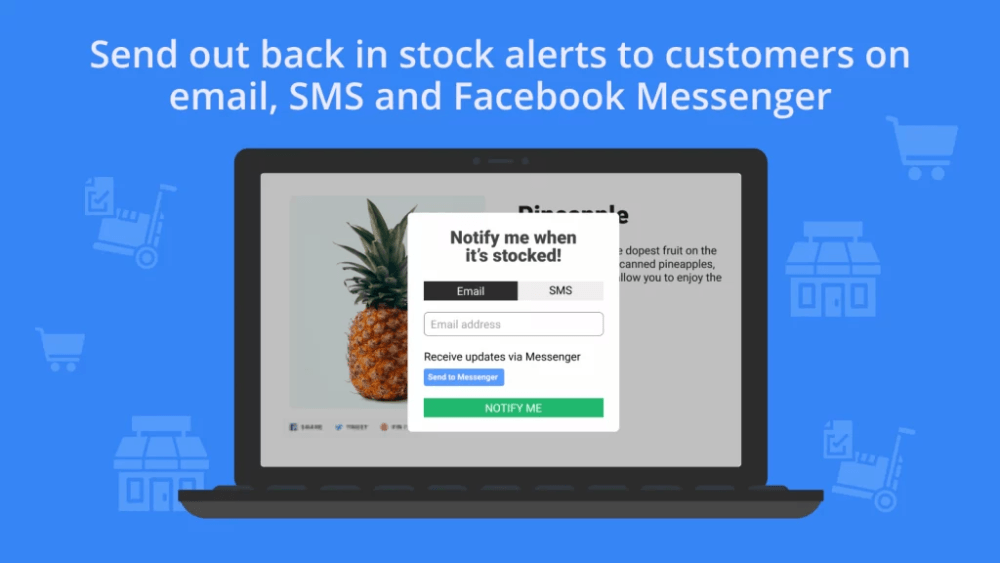
A back-in-stock SMS alert is a text message sent to a shopper who requested notification when a sold-out product becomes available again. Usually, the brand captures that request through a “Notify Me” button or restock form on the product page. Then, once inventory crosses a defined threshold, the platform automatically triggers a text.
This flow turns a stockout from a dead end into a lead capture opportunity. Instead of losing the shopper, the brand creates a waitlist. Klaviyo’s current help center documentation explains that brands can build back-in-stock forms for Shopify and BigCommerce stores, customize the “Notify me” experience on out-of-stock product pages, and trigger messages once stock returns.
That change matters because stockouts do not always reflect lost interest. In many cases, they reflect demand that arrived before supply. Therefore, the smartest brands treat out-of-stock traffic as a signal, not a failure.
Back-in-stock SMS alerts often help brands do three things at once. First, they recover demand that would otherwise disappear. Second, they create a better customer experience by acknowledging interest instead of ending the journey. Third, they generate product-level demand data because waitlists show which items people care about most. Shopify app listings built around restock notifications repeatedly position waitlists and restock alerts as ways to recover lost sales and better understand product demand.
How product drop alerts work
Product drop alerts work similarly, but the context is different. Instead of responding to a restock event, the text responds to a launch event.
Brands use drop alerts to announce new collections, limited-edition products, collaborations, seasonal items, or member-only releases. In these cases, the goal is not just awareness. The goal is immediate action.
That is why SMS fits especially well. When a brand launches a limited drop, timing and urgency often matter more than long-form storytelling. A concise text can tell subscribers that the drop is live, remind them why it matters, and link them straight to the product or collection page.
This strategy works particularly well for brands with scarcity-driven models. If a product may sell out quickly, SMS creates a direct line to the people most likely to buy first. Moreover, because consumers already opt in to receive promotional and product-related messages from businesses at high rates, the channel has strong reach when brands use it well.
Why e-commerce brands prefer SMS for these alerts
E-commerce brands use many channels, but back-in-stock and product drop alerts ask for something specific: speed, visibility, and relevance. SMS combines all three.
Email still plays an important role, especially for storytelling, product education, and broader lifecycle automation. However, SMS has a clear advantage when the moment is time-sensitive. Klaviyo’s restock guidance specifically recommends SMS because it can alert subscribers immediately when products they want return to inventory.
Furthermore, product availability creates a natural reason to text. A restock is not a random promotion. A drop is not a generic newsletter. Each message ties directly to something the shopper asked for or is likely to care about. Therefore, the message feels more relevant than a broad campaign.
This relevance also helps protect the subscriber experience. SimpleTexting’s 2025 data notes that texting too frequently is the fastest way to lose subscribers. So, brands benefit when they reserve SMS for moments that genuinely matter. Back-in-stock and drop alerts fit that rule very well because they are timely, specific, and clearly useful.
Common ways brands collect demand before the alert
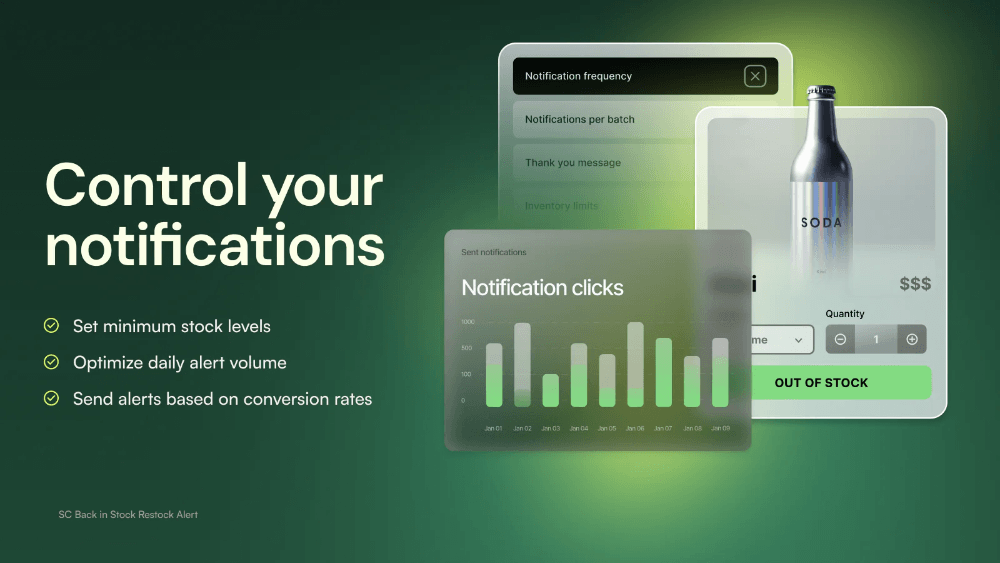
Strong SMS alert programs usually begin before the text itself. Brands first need a way to capture intent.
For back-in-stock alerts, this often happens via a product page form or a “Notify Me” button. Klaviyo’s documentation explains that brands can customize these on supported e-commerce platforms and use them to collect SMS subscribers who want restock notifications.
For product drops, brands often collect subscribers through pop-ups, landing pages, VIP waitlists, quizzes, or early-access sign-up forms. Some brands segment these lists by product category, launch type, or subscriber status. As a result, they can notify the right audience at the right moment instead of sending the same launch message to everyone.
This matters because not every alert should go to every subscriber. A shopper waiting for a specific sneaker restock should not necessarily get every beauty drop alert. Likewise, a VIP subscriber who asked for exclusive access may deserve earlier messaging than a broader promotional list.
Therefore, segmentation plays a major role in performance. The more closely the message matches the shopper’s actual interest, the more likely the alert is to convert.
Best practices for back-in-stock SMS alerts
The best back-in-stock messages stay short, direct, and immediately actionable.
Klaviyo’s help center advises brands to keep these messages concise and optimize sending frequency. That guidance makes sense because shoppers do not need a long explanation when stock returns. They need a fast reminder and a fast path to buy.
A strong back-in-stock SMS usually includes:
- the product or category name,
- a clear statement that the item is back,
- a sense of urgency when justified,
- a direct link to purchase.
For example: “Good news — the Black Essential Hoodie is back in stock. Grab yours now: [link]”
That format works because it removes friction. The shopper immediately understands what happened and what to do next.
However, brands should also consider inventory realities. If restocks are small, the message should go out fast and honestly. If the stock is deeper, the text can feel slightly less urgent. In both cases, the message should reflect the real situation rather than artificial pressure.
Best practices for product drop SMS alerts
Product drop alerts need a slightly different tone because they often launch excitement rather than restore access.
These texts work best when they create clarity and momentum. The subscriber should know what was launched, why it matters, and what to click. Additionally, if the drop is exclusive, limited, or early-access-only, the text should make that value clear.
For example: “It’s live. Our Spring Capsule just dropped. Shop now before styles sell out: [link]”
Or: “VIP early access starts now. Shop the collab before public release: [link]”
These messages work because they move quickly from announcement to action. Moreover, they respect the pace of SMS. The channel works best when it feels direct and immediate, not overloaded.
The role of urgency and exclusivity
Urgency matters in both restock and drop alerts, but brands need to use it carefully.
The best urgency reflects reality. If the item sold out before, saying it may sell quickly again makes sense. If the product is genuinely limited, highlighting that scarcity helps the shopper prioritize the decision. Likewise, if a VIP group truly gets early access, that exclusivity can drive stronger engagement.
However, fake urgency weakens trust. So, brands should avoid exaggerated countdowns or claims that do not match actual inventory or access conditions.
Done well, urgency helps shoppers act on real demand. Done poorly, it turns a useful alert into a gimmick.
How two-way SMS can improve alert performance
Although many back-in-stock and drop alerts are one-way messages, two-way SMS can make them even stronger.
SimpleTexting reports that 71% of consumers want the ability to text a business back. That matters because some shoppers do not buy immediately for one simple reason: they still have a question.
For example, a shopper might want to confirm sizing, shipping timing, compatibility, or color details before buying a restocked item. In that case, a two-way SMS setup gives the brand a chance to remove the final barrier to purchase.
A simple version might say: “Need help before you order? Reply here, and we’ll help.”
That small addition can turn an alert into a conversation, which is especially useful for higher-consideration products.
Compliance and consent still matter
Even though restock and drop alerts feel highly relevant, brands still need proper consent.
CTIA’s messaging guidance stresses that senders should obtain the appropriate level of consumer consent before texting and should provide clear opt-out options. CTIA also emphasizes that message senders should offer clear calls to action when collecting consent.
That means brands should not treat interest in a product as automatic permission to send promotional texts. Instead, they should clearly collect consent, explain what the shopper is signing up for, and honor opt-outs immediately.
This is especially important because the messaging ecosystem has become more protective of consumers. CTIA’s current messaging materials and related security best practices continue to center consent and opt-out handling as core expectations.
What brands should measure
Brands should not judge these alerts only by sends or clicks. Instead, they should look at the business outcomes that show whether the program actually works.
Important metrics include:
- waitlist sign-up rate,
- click-through rate,
- conversion rate,
- time to purchase after the alert,
- revenue per message,
- unsubscribe rate,
- product-level demand captured.
These numbers tell a fuller story. For example, a restock program with strong waitlist growth but weak conversion may point to pricing or inventory issues. On the other hand, a drop alert with strong clicks and low conversions may point to landing-page friction.
Therefore, brands should treat SMS alerts as part of a larger conversion flow, not as isolated sends.
Common mistakes to avoid
Many brands weaken back-in-stock and drop SMS programs by making a few avoidable mistakes.
First, they wait too long to send the alert. That reduces the value of the moment. Second, they write messages that are too vague. If the shopper cannot tell what is back or what just dropped, the text loses power. Third, they send alerts without clear segmentation, which lowers relevance. Fourth, they overuse urgency, which hurts trust. Finally, they ignore consent mechanics, which creates compliance and deliverability risks.
Fortunately, these problems are fixable. Brands can improve performance by collecting clear opt-ins, connecting messages to real shopper intent, and making every alert easy to act on.
Final thoughts
Back-in-stock and product drop alerts work because they reconnect demand with availability. SMS makes that connection faster, clearer, and more immediate.
That is why so many e-commerce brands use the channel for these moments. A shopper wants a sold-out item. A launch is about to go live. A limited product becomes available again. In each case, the window to convert may be short. Therefore, the best channel is often the one that reaches the shopper first and makes the next step obvious.
When brands combine strong consent practices, smart segmentation, concise writing, and accurate timing, SMS alerts can turn product interest into revenue very quickly. More importantly, they can do it in a way that feels useful to the shopper instead of intrusive.