
📑Table of Contents:
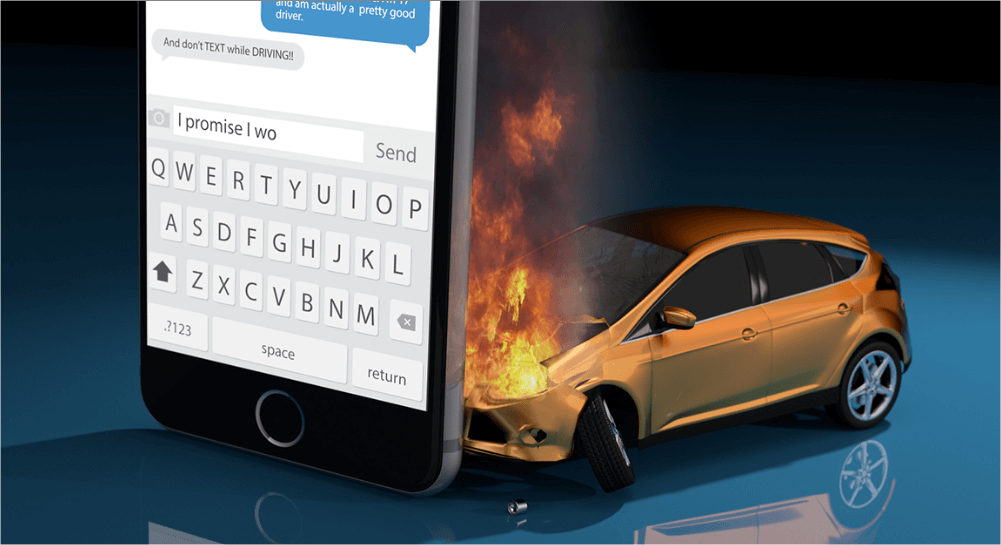
Texting and driving is one of the deadliest habits on the road. Despite countless warnings, new laws, and public awareness campaigns, distracted driving accidents remain alarmingly high. Drivers of all ages admit they text, check notifications, or even browse the internet while behind the wheel. Yet the consequences can be devastating. These statistics prove that no text, call, or notification is worth a life.
Why Texting and Driving Is So Dangerous
Texting and driving combines three dangerous distractions at once: visual, manual, and cognitive. You take your eyes off the road, your hands off the wheel, and your mind off driving. Just five seconds of distraction at 55 mph equals the length of a football field. During that time, you are essentially driving blind. That’s why texting and driving makes a crash up to 23 times more likely.
Teenage Texting and Driving Statistics
Teen drivers are the most vulnerable to distracted driving. Their reliance on phones and pressure to respond instantly create serious risks.
- Research shows 9 out of 10 teens expect a text reply within five minutes or less.
- Teens who text while driving spend 10% of their time outside their lane.
- Teens are the largest age group reported as distracted in fatal crashes.
- 77% of teens say adults tell them not to text and drive, but many see adults do it all the time.
- Six percent of all drivers in fatal crashes were distracted, but that number jumps to 8% for drivers aged 15–19.
- 97% of teens say texting while driving is dangerous, yet 43% still admit to doing it.
- Teens with distracted parents are 2–4 times more likely to drive distracted themselves.
- More than 58% of teen crashes happen due to driver distraction.
Clearly, education is not enough. Teens need role models and stricter accountability to break this deadly habit.
Shocking Distracted Driving Statistics
Even adults underestimate how dangerous distracted driving is. These numbers might shock you into putting your phone down for good.
- As of 2024, 36 states and Washington D.C. banned cell phone use for novice drivers.
- 25 states and D.C. banned cell phone use for school bus drivers.
- 38% of people aged 18–24 said they were “very familiar” with their state texting laws.
- 55% wrongly believed texting while driving is illegal in all 50 states.
- Texting while driving makes a crash up to 23 times more likely.
- Nearly half of surveyed drivers said they consider texting as dangerous as drunk driving.
- Women are more likely than men to use phones while driving.
- Voice-activated in-car tech is no safer — it still distracts drivers mentally.
- During the daytime, over 800,000 drivers are using phones at the wheel.
- Using a phone makes you 5.36 times more likely to crash.
- Talking on a phone while driving impairs you as much as being legally drunk.
When you add these numbers together, the picture becomes clear: distracted driving is no minor problem. It is a national epidemic.
Driver Denial in Distracted Driving
Many drivers know the risks but deny their own responsibility. This denial fuels dangerous behavior.
- 84% of drivers said cell phone distractions are unacceptable, yet 36% admitted to doing it in the last month.
- 20% of drivers aged 18–20 claimed texting does not affect their driving.
- Nearly 30% of drivers ages 21–34 said the same.
- In 2024, almost half of adults admitted to texting while driving.
- 51% of those admitted they knew their state laws very well.
- 60% of drivers said they use GPS apps while driving.
- Only 7% of them believed GPS use is more dangerous than texting.
- 19% of drivers confessed to using the internet while driving.
- Studies show voice-to-text is no safer than manual texting.
This denial creates a dangerous cycle. People know it’s risky but believe “it won’t happen to me.”
Texting and Driving Death Statistics
The most tragic outcome of distracted driving is death. Families are torn apart by crashes that could have been prevented.
- In 2022, 3,308 people were killed due to texting or other distractions.
- That number represented 7.8% of total traffic deaths.
- Eight percent of all fatal crashes were linked to driver distraction.
- 289,310 people were injured in crashes involving distracted drivers in 2022.
- 18% of those killed were pedestrians, bicyclists, or other non-occupants.
- In 2022, 368 fatal crashes were directly tied to texting.
- On any given day in the U.S., nine people die and more than 1,000 are injured in distracted driving crashes.
These statistics highlight the deadly price of one text message.
What Counts as Distracted Driving?
Distracted driving is any activity that diverts attention away from safely operating a vehicle. Safety experts categorize distraction into three main types:
Visual distraction – Taking your eyes off the road.
Example: Looking down at your phone to read a text.
Manual distraction – Taking your hands off the wheel.
Example: Typing a message or holding your phone.
Cognitive distraction – Taking your mind off driving.
Example: Mentally focusing on a conversation instead of traffic conditions.
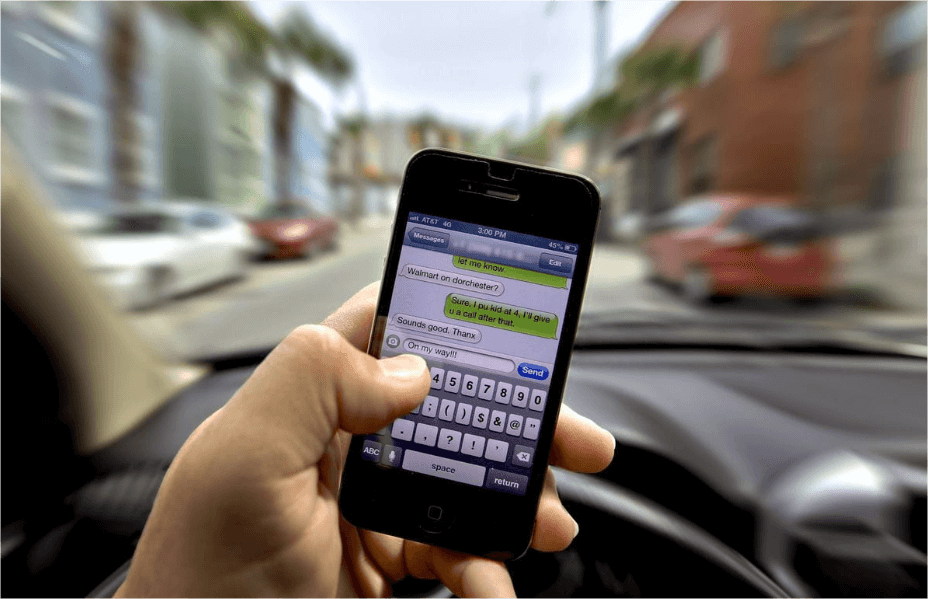
Texting while driving is particularly dangerous because it involves all three forms at once. When a driver reads or sends a message, their eyes leave the road, their hands leave the wheel, and their attention shifts away from traffic. Few other distractions combine all three simultaneously — which is why texting is often considered the most dangerous driving behavior behind impaired driving.
How Long Are Your Eyes Off the Road?
Many drivers underestimate how long they look away from traffic while texting.
On average, sending or reading a text takes about 5 seconds. At 55 mph, that means traveling the length of a football field with your eyes completely off the road.
To put that into perspective:
- 5 seconds at 55 mph = roughly 100 yards traveled “blind.”
- Even a 2-second glance significantly increases crash risk.
- Reaction time slows dramatically when cognitive attention is divided.
Studies have also shown that texting while driving can impair reaction time as much as — or even more than — alcohol at the legal limit. When the brain is focused on composing or reading a message, it cannot properly process sudden braking, lane changes, or unexpected obstacles.
This measurable delay is what turns “just a quick text” into a potentially fatal decision.
Texting and Driving vs Drunk Driving
Many people believe drunk driving is far more dangerous than texting. While both are extremely hazardous, the comparison often surprises people.
Research has found:
- Texting drivers may be up to 6 times more likely to cause a crash compared to focused drivers.
- Some studies show texting can impair reaction time more than driving at the legal alcohol limit.
- Drivers using phones frequently fail to notice stop signs, pedestrians, and traffic signals.
One of the biggest dangers is the public perception gap. Society widely condemns drunk driving, yet many drivers admit to occasionally texting behind the wheel. Because texting feels normal and socially accepted, it doesn’t trigger the same internal warning alarm — even though the risk can be just as severe.
In reality, both behaviors dramatically increase crash risk. The difference is cultural perception, not danger level.
Ways to Prevent Distracted Driving
The statistics are frightening, but there are ways to protect yourself and others. Small steps can save lives.
- Turn off notifications before starting the car.
- Pull over if you need to call or text.
- Keep your phone out of reach to avoid temptation.
- Use apps that block messages while driving.
- Install a phone holder to use GPS safely at eye level.
- Remind your family and friends not to text and drive.
- Lead by example — teens copy adult behavior.
Even one good decision can prevent tragedy. A text can wait, but life cannot.
Final Thoughts
Texting and driving is one of the most dangerous habits in modern life. The statistics prove it is as deadly as drunk driving. Teens, adults, and even experienced drivers are guilty of risky behaviors behind the wheel. But it only takes one second of distraction to cause a crash that changes lives forever. Put your phone away, focus on the road, and remind others to do the same. Safe driving saves lives — including yours.