
📑Table of Contents:

SMS marketing has evolved far beyond simple promotional blasts. While traditional text campaigns still drive strong engagement, new technologies are pushing the channel into a smarter, more interactive era. Today, artificial intelligence, Rich Communication Services (RCS), and advanced personalization reshape how brands connect with customers.
Because mobile usage continues to rise globally, brands increasingly prioritize messaging as a core revenue channel. However, customers also expect relevance, speed, and seamless experiences. As a result, emerging technologies now help marketers meet those expectations while scaling performance.
This guide explores how AI, RCS, and personalization transform SMS marketing. Additionally, it explains how these innovations improve engagement, automate workflows, and drive measurable growth.
The Evolution Of SMS Marketing
SMS began as a straightforward broadcast tool. Marketers collected opt-ins and sent time-sensitive promotions. While that model worked, it lacked flexibility and depth.
Over time, marketers added automation such as cart reminders and delivery updates. Then, segmentation improved targeting. However, the real shift began when data integration and artificial intelligence were introduced.
Now, SMS functions as part of an intelligent ecosystem. It responds to behavior in real time. It adapts content dynamically. Furthermore, it integrates with email, CRM systems, and e-commerce platforms.
Consequently, SMS no longer acts as a standalone channel. Instead, it forms a responsive layer within omnichannel marketing strategies.
Artificial Intelligence In SMS Marketing
AI drives the most significant transformation in SMS marketing today. Although automation existed for years, AI adds predictive decision-making and adaptive content.
Predictive Send-Time Optimization
Timing plays a crucial role in SMS performance. Traditionally, marketers scheduled messages based on general assumptions. However, AI analyzes engagement patterns across millions of interactions.
By evaluating when individuals open, click, or purchase, AI determines the optimal send time for each subscriber. As a result, messages arrive when customers are most likely to respond.
Moreover, predictive timing reduces fatigue. Instead of sending everyone the same message at once, brands distribute messages intelligently.
AI-Driven Segmentation
Segmentation improves relevance. Yet, manual segmentation often limits scale.
AI addresses this challenge by analyzing behavioral data, including browsing history, purchase frequency, and engagement depth. Then, it groups subscribers based on predicted intent rather than static categories.
For example, AI can identify customers at risk of churn. It can also flag high-value shoppers primed for upsells. Therefore, marketers can tailor SMS offers accordingly.
Because AI updates segments dynamically, campaigns stay relevant even as behavior changes.
Intelligent Content Generation
AI-powered copy tools now assist marketers in drafting SMS content. These tools analyze tone, performance data, and character limits to generate optimized variations.
Additionally, AI can personalize product recommendations within text messages. For instance, it can insert items based on previous purchases or browsing behavior.
While human oversight remains critical, AI accelerates content testing and iteration.
Conversational AI And Chatbots
SMS increasingly supports two-way conversations. AI-driven chatbots can answer questions, recommend products, and guide customers through purchasing decisions.
For example, a customer might text a brand asking about sizing. The AI bot can respond instantly with tailored recommendations. If the question becomes complex, the system can escalate to a human agent.
As a result, brands improve responsiveness without overwhelming support teams.
Rich Communication Services (RCS): The Next Generation Of Messaging
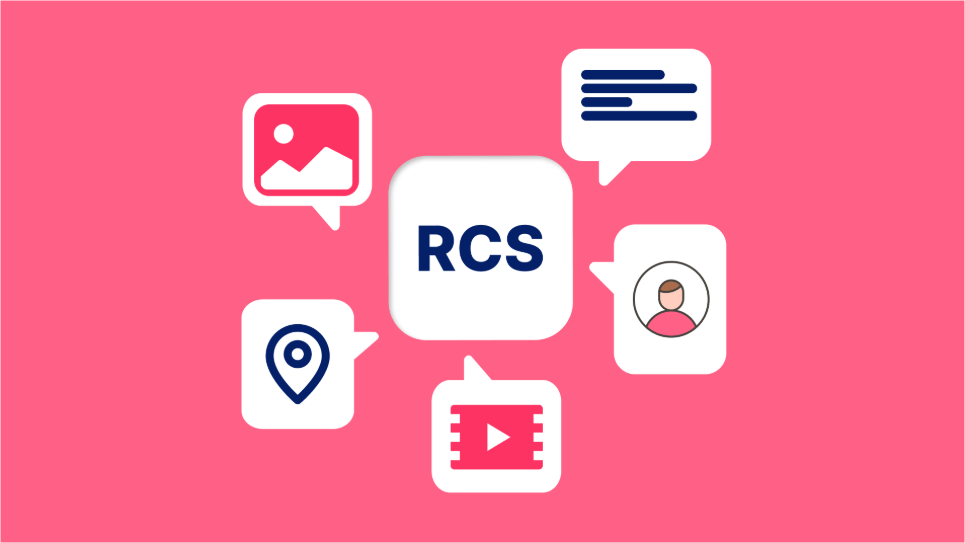
While SMS relies on plain text, RCS introduces multimedia and interactive features. Therefore, RCS enhances the visual and functional experience of mobile messaging.
What Is RCS?
RCS is an enhanced messaging protocol supported by many Android devices and carriers. Unlike traditional SMS, RCS allows rich media, interactive buttons, read receipts, and branding elements.
Because RCS operates over data networks, it supports features similar to those of messaging apps. However, it maintains native integration within the phone’s default messaging app.
Enhanced Visual Experiences
RCS enables brands to send high-resolution images, carousels, and videos directly within a message thread. Consequently, customers can browse products without leaving the conversation.
For example, a retailer can showcase multiple product images in a swipeable carousel. Then, customers can tap a button to purchase or learn more.
This interactive design shortens the path from interest to action.
Branded Messaging And Trust
RCS allows verified sender profiles. Brands can display logos, brand colors, and official names. Therefore, customers immediately recognize the source of the message.
This verification reduces fraud and increases trust. Moreover, it improves engagement by giving recipients confidence to interact with legitimate businesses.
Interactive Features And Action Buttons
Unlike traditional SMS, RCS supports clickable buttons within the message body. For instance, customers can tap “Shop Now,” “Track Order,” or “Confirm Appointment.”
Because these actions require fewer steps, friction decreases. As a result, conversion rates often improve.
However, marketers must consider device compatibility. While RCS adoption grows steadily, not all devices support it. Therefore, brands should maintain fallback SMS versions to ensure universal reach.
Advanced Personalization: Moving Beyond First Names
Personalization in SMS once meant inserting a customer’s first name. Today, advanced personalization goes much deeper.
Behavioral Personalization
Behavioral data allows brands to tailor messages based on real actions.
For example, if a customer views running shoes but does not complete the purchase, the brand can send a follow-up SMS with similar products. Additionally, it can include inventory alerts or limited-time incentives.
Because the message reflects actual interest, engagement increases naturally.
Dynamic Product Recommendations
Modern SMS platforms integrate with e-commerce systems. Therefore, they can pull real-time product data into messages.
For instance, a text might say, “The jacket you viewed is almost sold out in your size.” This approach combines urgency with relevance.
Furthermore, AI algorithms continuously refine recommendations. Over time, they learn which products resonate most with each subscriber.
Lifecycle-Based Messaging
Customers move through stages such as prospect, first-time buyer, repeat purchaser, and VIP. Advanced personalization aligns SMS content with these stages.
For example, new subscribers might receive educational content. Meanwhile, repeat customers receive loyalty rewards. VIP shoppers might receive early access to product launches.
Because messaging aligns with the lifecycle stage, customers feel understood rather than targeted.
Location And Contextual Personalization
Geolocation and contextual signals further enhance relevance.
Retailers can send store-specific promotions based on proximity. Additionally, brands can adjust messaging based on weather conditions or local events.
However, marketers must handle location data responsibly. Transparency and clear opt-in processes protect trust and compliance.
How These Technologies Work Together

AI, RCS, and personalization do not operate in isolation. Instead, they reinforce one another.
For example, AI can determine which subscribers should receive RCS messages versus standard SMS. Then, personalization engines can populate dynamic product carousels within RCS.
Meanwhile, predictive analytics can trigger personalized texts at optimal times. As a result, customers receive visually engaging and contextually relevant messages precisely when they are most receptive.
Because these technologies integrate seamlessly, they create experiences that feel intuitive rather than automated.
Implementation Considerations
Although emerging technologies offer powerful advantages, brands must implement them thoughtfully.
Data Infrastructure
First, ensure that your CRM, e-commerce platform, and messaging tools integrate smoothly. Without unified data, AI and personalization cannot function effectively.
Additionally, maintain accurate data hygiene. Remove inactive subscribers regularly. Clean data improves AI accuracy and deliverability.
Compliance And Privacy
Regulations such as TCPA and GDPR govern messaging practices. Therefore, brands must obtain explicit consent and honor opt-out requests promptly.
Moreover, as personalization deepens, transparency becomes essential. Customers should understand how brands use their data.
Testing And Optimization
Technology alone does not guarantee success. Instead, brands must test continuously.
For example, compare AI-optimized send times against fixed schedules. Evaluate RCS engagement against standard SMS. Analyze whether personalized recommendations outperform generic offers.
Because customer behavior evolves, ongoing experimentation drives long-term improvement.
The Future Of SMS Marketing
SMS marketing stands at a pivotal moment. AI continues to expand predictive capabilities. Meanwhile, RCS adoption continues to grow steadily across global markets. Additionally, personalization becomes increasingly sophisticated as data ecosystems mature.
In the coming years, expect deeper integration between SMS and other channels. AI may orchestrate cross-channel journeys automatically. Furthermore, real-time data streams will enable instant messaging refinement.
However, the core principle will remain constant: relevance drives results.
Brands that embrace emerging technologies thoughtfully will create richer, more responsive customer experiences. Conversely, brands that cling to outdated broadcast tactics will struggle to maintain engagement.
Final Thoughts
Emerging technologies reshape SMS marketing into a dynamic and intelligent channel. AI enhances timing, segmentation, and content generation. RCS introduces rich media and interactive functionality. Advanced personalization ensures that messages reflect real customer behavior.
Together, these innovations transform simple text campaigns into powerful engagement engines. When brands strategically integrate AI, RCS, and personalization, they deliver smarter messages, build stronger relationships, and drive measurable growth.
Ultimately, the future of SMS marketing belongs to brands that combine technology with thoughtful execution.