
📑Table of Contents:
- Why SMS Works So Well For Restaurants
- Start With The Right Foundation: List Quality And Consent
- Campaign Idea: Lunch Rush Boost Texts
- Campaign Idea: Slow Hour “Fill The Gap” Offers
- Campaign Idea: Limited Quantity Specials
- Campaign Idea: Weather-Based Messaging
- Campaign Idea: First-Time Order Welcome Series
- Campaign Idea: Cart And Checkout Rescue For Online Orders
- Campaign Idea: VIP Early Access And Secret Menu Drops
- Campaign Idea: Loyalty Rewards That Feel Immediate
- Campaign Idea: Reservation And No-Show Reduction Texts
- Campaign Idea: Catering And Group Order Prompts
- Campaign Idea: Reviews And Feedback Requests That Improve Reputation
- Segmentation: The Fastest Way To Improve Results
- Timing And Frequency: Don’t Burn The List
- What To Measure So Campaigns Improve
- Common Restaurant SMS Mistakes To Avoid
- Final Thoughts
Restaurants live and die by timing. A slow lunch hour hurts margins. A rainy evening can crush reservations. And a sudden spike in demand can overwhelm staff if the kitchen is not ready. Because conditions shift quickly, restaurants need marketing that moves just as fast.
SMS fits that reality. Text messages reach customers immediately. They also feel personal and local. Therefore, SMS can drive quick bursts of orders, reservations, and repeat visits when used strategically.
However, many restaurants treat SMS like a coupon cannon. They blast discounts. Then they wonder why opt-outs rise. In truth, restaurant SMS works best when it feels helpful, timely, and specific. This guide shares campaign ideas that boost orders quickly while protecting trust and list health.
Why SMS Works So Well For Restaurants
Restaurants make decisions that happen in the moment. People decide where to eat based on hunger, convenience, and mood. Therefore, the best messages arrive close to the decision window.
SMS delivers that timing advantage. Customers typically see texts quickly. As a result, you can influence where they order from right now rather than tomorrow.
Also, SMS feels less crowded than email. Inboxes overflow, while text inboxes stay quieter. Because of that, your message has a better chance of standing out.
Finally, SMS works across dine-in, takeout, and delivery. One short message can fill seats, move pickup volume, or push online orders.
Start With The Right Foundation: List Quality And Consent
Before you run campaigns, build your list the right way. Restaurants often collect phone numbers at checkout, during online ordering, or through Wi-Fi sign-ins. However, you still need clear consent.
Tell customers what they will get. Explain frequency. Offer an easy opt-out. This transparency protects trust and reduces complaints.
Also, focus on list quality over list size. A smaller list of real fans will outperform a large list of people who barely remember opting in.
When consent and expectations stay clear, campaigns perform better and last longer.
Campaign Idea: Lunch Rush Boost Texts
Lunch traffic can be unpredictable. Therefore, a simple lunch boost text can smooth volume on slow weekdays.
Send a short message late morning, ideally around 10:30 to 11:30. Offer a specific lunch combo or limited-time special. Then include a direct ordering link.
Keep the offer tight. For example, highlight one top-selling item and one add-on. Because too many choices slow decisions, fewer options convert faster.
Also, test small incentives instead of deep discounts. Free fries or a drink often feels strong while protecting margins.
Campaign Idea: Slow Hour “Fill The Gap” Offers
Every restaurant has slow windows. Maybe it’s mid-afternoon. Perhaps it’s early weeknights. Because fixed costs do not pause, filling those gaps matters.
SMS works well here because it reaches nearby customers quickly. You can send a “happy hour for food” style message that runs for a short window.
For example, “From 3–5 today: 2-for-1 appetizers for pickup” creates urgency and clarity. However, keep it occasional. If you run it daily, customers learn to wait.
Additionally, tie the offer to kitchen capacity. If you can handle more orders, send the text. If you can’t, skip it.
Campaign Idea: Limited Quantity Specials
Scarcity drives action. Yet it must be real. Therefore, limited-quantity specials work best when you truly have a limited item.
Examples include a smoked brisket batch, a seasonal dessert, or a chef’s special. A text like “Only 25 slices of pie today” pushes quick orders without needing a discount.
This campaign works because it feels authentic. It also builds brand personality around freshness and craft.
Moreover, limited specials create habits. Customers begin to watch for your weekly “drop.”
Campaign Idea: Weather-Based Messaging
Weather changes demand. Rain often boosts delivery. Heat boosts cold drinks. Big games boost group orders.
Because SMS moves fast, you can react to the forecast. For example, on rainy evenings, send a delivery-focused message with a simple offer like “Free delivery on orders over $X tonight.”
On hot afternoons, highlight iced drinks or frozen desserts. On cold nights, highlight soups and comfort food.
However, keep the message aligned with reality. If you cannot deliver quickly during storms, adjust the offer to pickup instead.
Campaign Idea: First-Time Order Welcome Series
New customers need a reason to come back. Therefore, a short welcome series can quickly increase repeat purchases.
Start with a thank-you message after the first order. Then, after a few days, send a “try this next” suggestion. Finally, offer a small incentive for a second purchase.
The key is helpfulness. Recommend popular items. Share a best-selling combo. Give a simple “order again” link.
Because the second order often predicts loyalty, this sequence can lift long-term revenue.
Campaign Idea: Cart And Checkout Rescue For Online Orders
Online ordering creates a new problem. Customers start an order, then leave. Because decision windows are short, you need fast follow-up.
A short “finish your order” text can bring customers back. Keep it friendly and simple. Offer the direct link back to their cart when possible.
Avoid aggressive language. Instead of “You forgot,” say “Want to pick up where you left off?” This tone feels helpful.
Also, reserve discounts for cases where they truly move the needle. Otherwise, start with convenience.
Campaign Idea: VIP Early Access And Secret Menu Drops
Restaurant fans love exclusivity. Therefore, “VIP list” messaging can drive fast spikes without constant discounts.
Offer early access to new menu items. Share a secret menu item for SMS subscribers only. Invite them to limited-seating events, like tastings.
These campaigns increase engagement because they feel like perks rather than promotions.
However, keep the VIP promise real. If everyone gets the same offer everywhere, exclusivity collapses.
Campaign Idea: Loyalty Rewards That Feel Immediate
Loyalty programs often fail because they feel slow. Customers do not want to wait months for a reward.
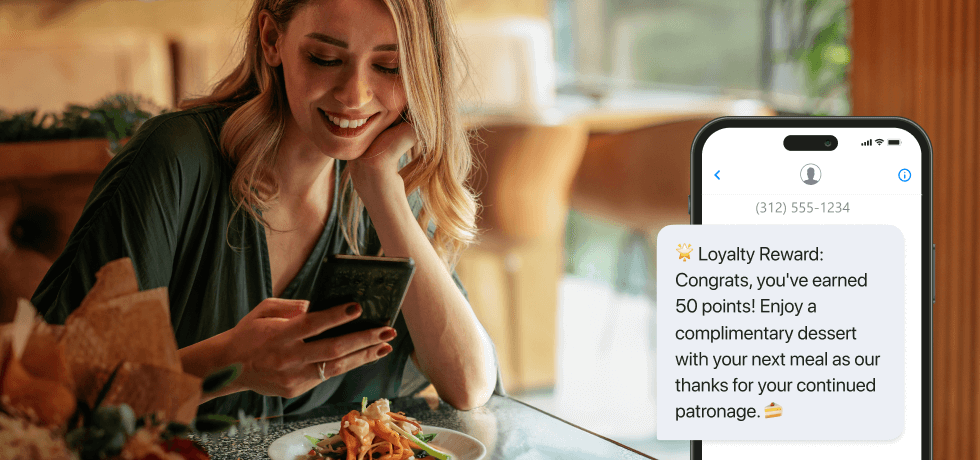
SMS can make rewards feel immediate. Send point updates. Send “you’re close” nudges. Offer a quick redeem link.
For example, “You’re one visit away from a free dessert” motivates action better than a generic points email.
Also, celebrate milestones. A simple birthday text with a treat offer can create a memorable visit.
Campaign Idea: Reservation And No-Show Reduction Texts
SMS is not only for marketing. It also improves operations.
Reservation confirmations reduce no-shows. Reminder texts keep schedules full. Two-way replies allow quick reschedules.
For example, “Reply YES to confirm your 7 PM table” creates a micro-commitment. As a result, attendance often improves.
Also, if a guest cancels, you can fill the spot quickly with a waitlist text. This approach protects revenue without extra labor.
Campaign Idea: Catering And Group Order Prompts
Catering sells big tickets. Yet customers often forget to plan. Therefore, timely SMS prompts can increase catering orders.
Target business customers mid-week. Offer simple catering bundles. Include lead times clearly.
For example, “Feeding a team this Friday? Our 10-person taco pack is ready in 24 hours” makes the decision easy.
Because catering decisions are practical, clarity matters more than hype.
Campaign Idea: Reviews And Feedback Requests That Improve Reputation
Reviews drive restaurant discovery. Therefore, SMS can support reputation growth when done respectfully.
Send a short feedback request after an order. If the customer rates the experience highly, follow with a review link. If they rate it low, invite them to reply so you can fix it.
This approach protects public ratings while also improving service. It also shows customers you care, which builds trust.
However, keep requests occasional. If you ask after every single order, customers tune out.
Segmentation: The Fastest Way To Improve Results
Segmentation turns generic blasts into relevant messages. Even simple segments can lift performance.
Segment by order type. Dine-in fans may want reservation offers. Delivery customers may wish to have free delivery nights. Pickup regulars may try to speed perks.
Also, segment by frequency. Loyal customers may appreciate VIP drops. New customers need guidance. Lapsed customers may need a reactivation nudge.
Because relevance reduces opt-outs, segmentation protects your list while boosting conversions.
Timing And Frequency: Don’t Burn The List
Restaurants can easily over-message. Because people treat texts as personal, frequency must be controlled.
For most restaurants, 1 to 4 promotional texts per month work well. You can increase slightly during special seasons, but you should explain why.
Timing matters too. Late morning works for lunch. Mid-afternoon works for early dinner decisions. Early evening works for last-minute plans.
Avoid late-night messages. Also, avoid back-to-back promos on consecutive days.
When you respect attention, customers stay subscribed and responsive.
What To Measure So Campaigns Improve
To improve fast, track a few core metrics. Track click-through rate. Track redemptions and orders. Track opt-outs. Then compare performance by segment and send time.
Also track revenue per message. A “high click” campaign may still fail if it drives low-margin orders. Therefore, tie metrics to real business outcomes.
Over time, your data will reveal which offers work, which time windows perform best, and which segments drive the most value.
Common Restaurant SMS Mistakes To Avoid
Many restaurants rely on constant discounts. This trains customers to wait for deals. Instead, balance discounts with exclusives, specials, and convenience.
Another mistake involves vague messages. “Big deal today” does not convert as well as “Free fries with any burger order until 6 PM.”
Also, some restaurants forget the operational side. Confirmation texts, waitlist texts, and pickup updates reduce friction and increase repeat visits.
Finally, many restaurants ignore capacity. If you cannot handle a rush, do not create one.
Final Thoughts
Restaurant SMS marketing boosts orders quickly because it aligns with how people decide where to eat. It reaches customers at the moment of intent. It reduces friction. And it can turn a slow hour into a profitable one.
However, the best results come from discipline. Build a permission-based list. Segment it. Send fewer messages with higher value. Then measure what matters and keep refining.
When you treat SMS as a service channel first and a promotional channel second, you build trust and drive revenue simultaneously.