
Plain text still has its place. It is fast, familiar, and easy to launch. However, plain text also creates limits. It forces every message to do too much with too little space, and it often leaves the customer with only one real choice: click a link or ignore the message. In 2026, that will no longer be enough for many brands.
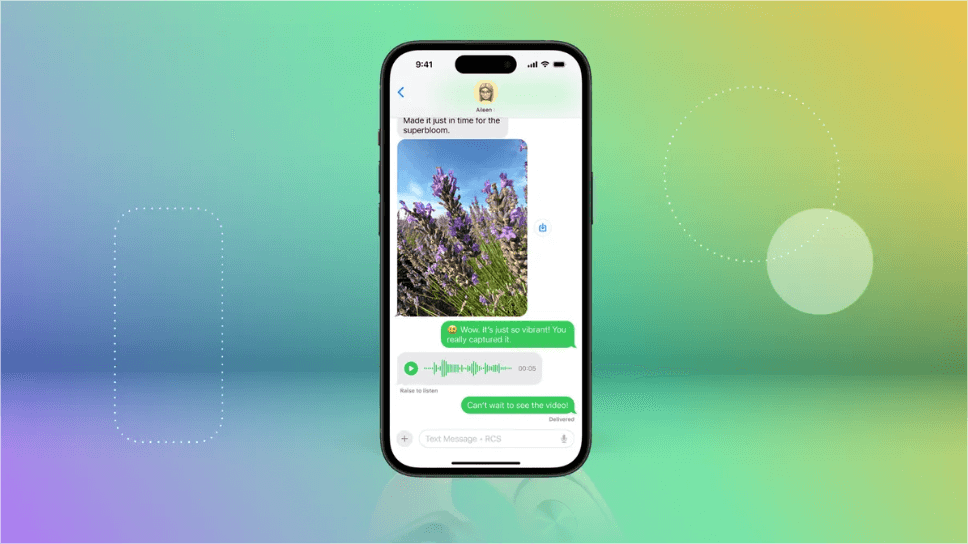
Customers now expect messaging to feel more intuitive, more visual, and easier to act on. At the same time, platforms have moved in that direction too. RCS for Business supports rich cards, suggested replies, suggested actions, and carousels inside the native messaging experience. Meanwhile, WhatsApp Business has expanded the broader business messaging landscape to include conversational automation and workflows, and messaging vendors such as Twilio now support carousel content with media, text, and buttons across channels like WhatsApp and RCS. As a result, brands no longer need to treat business messaging as a plain-text channel by default. They can design it as an interactive experience.
That shift matters because richer messaging does more than make messages look better. It changes how customers move through the decision-making process. Buttons reduce friction. Carousels organize options. Structured CTAs make intent clearer.
Moreover, branded rich messaging can increase trust because the message looks more like a legitimate business interaction and less like a random text with a link. Google’s recent RCS updates have also added more URL transparency in “Open a URL” actions to reduce hesitation to click and improve user confidence. So, rich messaging is not only a design upgrade. It is also a conversion and trust upgrade.
What Rich Messaging Actually Means
Rich messaging refers to business messages that go beyond plain text and a bare link. Instead of sending only words, a brand can include structured interactive elements that guide the user toward the next step. Depending on the channel, that can include rich cards, images, video, buttons, suggested replies, suggested actions, branded sender profiles, and horizontally scrollable carousels. RCS for Business explicitly supports rich cards with media, title text, description text, and suggested replies or actions. Multiple vertical rich cards can also be combined into a carousel.
This definition matters because many marketers still think of messaging in terms of copywriting alone. They ask how to write a shorter message, a punchier offer, or a clearer CTA. Those questions still matter. However, rich messaging adds a more important question: how can the message itself reduce decision friction? Therefore, the message’s job changes. It no longer just describes the next step. It helps the customer take it.
Why Plain Text Starts To Break Down
Plain text works best when the choice is simple. Confirm an appointment. Use a one-time code. Click to finish checkout. In those moments, too much design would only slow things down.
However, many business messaging moments are not that simple. A shopper may want to compare products. A traveler may need to pick a support path. A patient may need to confirm, reschedule, or call. A retailer may want to show several offers without forcing the user to open a landing page immediately. In those cases, plain text often creates unnecessary friction.
That friction appears in a few ways:
- The customer has to interpret too much from too little information
- The customer must leave a message to compare options
- The customer has only one generic CTA
- The brand cannot organize multiple choices cleanly
- The message feels less trustworthy when it relies on a bare link alone
Consequently, even a strong offer can underperform when the format makes action harder than it needs to be.
Why Buttons Matter More Than Marketers Think
Buttons look simple, but they solve a major messaging problem: they turn vague intent into a clear action path. Instead of asking a customer to type a reply or decide what to do on their own, buttons narrow the next step. That matters because friction often hides inside small moments of uncertainty.
RCS for Business supports suggested replies and suggested actions, which can guide users through fluid conversations and next steps. Twilio’s RCS documentation similarly highlights call-to-action buttons and suggested replies as part of richer business messaging. So, the platform’s direction is clear: business messaging works better when users can tap, not guess.
What Buttons Do Well
- Reduce typing effort
- Clarify the next action
- Improve response speed
- Support guided journeys
- Create cleaner conversation paths
- Lower drop-off in high-intent moments
For example, a service business should not send “Let us know what you’d like to do next” when it can send buttons for Confirm, Reschedule, and Call Us. Likewise, an e-commerce brand should not force shoppers to interpret a generic “Shop now” when it can offer View Bestsellers, See Sale, or Track Order based on context.
Why Carousels Change Product And Offer Messaging

Carousels solve a different problem. Instead of guiding a single action, they help a brand present several related options without prompting the user to leave the messaging interface too early. Google’s RCS documentation says multiple vertical rich cards can be combined into a carousel. Twilio’s carousel documentation likewise describes horizontally scrolling cards that can include media, text, CTA buttons, and quick-reply buttons for WhatsApp and RCS.
That matters because many brand messages involve comparison. A retailer may want to show three hero products. A travel company may want to surface itinerary options. A telecom brand may want to present plan tiers. A beauty brand may want to recommend a routine rather than a single item. Plain text handles those situations poorly because it compresses choice into a short block of words. By contrast, a carousel can structure that choice visually and keep the experience inside the conversation.
Best Uses For Carousels
| Use Case | Why A Carousel Helps | Better Than Plain Text Because |
|---|---|---|
| Product recommendations | Shows multiple items clearly | Customers can compare options faster |
| Plan or package selection | Organizes tiers or bundles | The message feels guided, not crowded |
| Event or travel options | Surfaces several choices at once | Users avoid extra landing-page steps |
| Cross-sell after purchase | Presents relevant add-ons visually | The path to add-on action gets shorter |
| Seasonal promotions | Highlights multiple featured offers | One message can carry more value |
Carousels should not replace every message. Still, when the brand needs to present more than one serious option, they often outperform plain text.
CTAs Need To Do More Than “Click Here”
A weak CTA is one of the most common problems in brand messaging. Too many messages still rely on generic prompts like “Learn more,” “Shop now,” or “Click here.” Those phrases are not always wrong, but they are often lazy. They leave too much work to the customer.
Rich messaging improves CTAs by letting brands pair the prompt with clearer context. A button can say Book A Demo, Track My Order, Get Support, Use My Offer, or See New Arrivals. In other words, the CTA can more directly reflect intent.
Google’s RCS materials emphasize suggested actions such as opening a URL, and its March 2026 update added a clearer display of the underlying URL within certain “Open a URL” actions to build user confidence and reduce click hesitation. That change says something important about modern messaging: trust and clarity now shape CTA performance more directly than ever.
Strong CTA Principles For Rich Messaging
- Use verbs that match the moment
- Make the action specific, not generic
- Keep each button focused on one intent
- Avoid too many equal-weight choices
- Match the CTA to the customer’s current stage
- Use trust-building language when the action opens a link
A CTA should feel like the natural next step, not like an extra decision.
Rich Messaging Works Best In Specific Moments
Not every message needs interactive design. In fact, brands often get better results when they reserve rich messaging for moments where it adds real value.
High-Impact Moments For Rich Messaging
- Product discovery
- Browse or cart recovery
- Appointment confirmation and rescheduling
- Customer support routing
- Loyalty or membership enrollment
- Order tracking and post-purchase assistance
- Plan comparison or guided selection
- Event reminders with multiple response options
These moments all share one trait: the user may need structure, not just information. Therefore, rich messaging works best where choice architecture matters.
Channel Choice Still Matters
Rich messaging is not one universal format. It depends on the channel and the customer’s device environment. RCS for Business supports rich cards, carousels, media, suggested replies, and suggested actions, but Google also notes that support and rendering can vary by device capability and screen size.
Additionally, if a user’s device does not support RCS or does not have it enabled, the platform can return a 404 NOT_FOUND, which means brands need fallback logic. Twilio also describes RCS Business Messaging as a channel with branded, verified senders and rich content, while offering SMS or MMS fallback when RCS support is unavailable.
That means a rich messaging strategy must stay practical. Brands should not ask only, “What rich feature can we use?” They should also ask, “What happens when the feature is unavailable?” The smartest teams build around channel capabilities rather than assuming every user sees the same experience.
Rich Messaging And Trust Go Together
Rich messaging often improves trust because it looks more deliberate, branded, and structured than plain text. Twilio’s RCS documentation highlights branded sender profiles, logos, read receipts, and rich content as key parts of the channel. Google’s RCS for Business platform is built around branded mobile experiences in the default messaging app. Together, those elements reduce the ambiguity that often makes plain-text business messages feel suspicious.
However, richer design alone does not create trust. The message still needs a clear purpose, recognizable context, clean links, and respectful consent practices. Otherwise, a polished message can still feel manipulative. So, rich messaging should support trust, not disguise weak messaging habits.
Common Mistakes Brands Should Avoid
Rich messaging offers greater creative freedom, but that freedom can lead to new mistakes.
Most Common Errors
- Adding buttons without a clear intent
- Using carousels when one strong option would convert better
- Treating every message like a mini landing page
- Overloading cards with too much copy
- Forgetting fallback logic for unsupported devices
- Repeating generic CTAs across every card
- Designing for novelty instead of usefulness
These mistakes usually stem from the same issue: brands focus on features rather than user decisions. However, rich messaging works best when it simplifies the path to action.
Frequently Asked Questions
What Is Rich Messaging For Brands?
Rich messaging is business messaging that goes beyond plain text by using features like buttons, cards, carousels, media, and interactive CTAs to guide customer actions.
Are Buttons Better Than Plain Text Links?
Often, yes. Buttons reduce effort, clarify intent, and make the next step easier to understand, especially in support, commerce, and scheduling use cases.
When Should Brands Use Carousels?
Brands should use carousels when customers need to compare several relevant options, such as products, plans, or offers, without leaving the messaging thread too early.
Can Rich Messaging Replace SMS Completely?
No. Rich messaging can upgrade the experience, especially through RCS and cross-channel tools, but fallback to SMS or MMS still matters for unsupported devices and broader reach.
Final Thoughts
Rich messaging gives brands a way to move beyond plain text and build messages that are easier to trust, easier to understand, and easier to act on. Buttons reduce hesitation. Carousels organize choice. Better CTAs shorten the path from attention to action. Therefore, rich messaging is not just a creative trend. It is a practical response to the way customers now engage in business conversations.
In 2026, the brands that win in messaging will not simply write shorter messages. Instead, they will design better ones. They will use the message’s structure to reduce friction, guide decisions, and make action feel obvious. And that is exactly where rich messaging becomes more than an upgrade. It becomes a competitive advantage.