
📑Table of Contents:
- What Omnichannel Integration Actually Means
- Why SMS Completes The Omnichannel Triangle
- Assign Clear Jobs To Each Channel
- Build A Shared Data Layer For Clean Coordination
- Omnichannel Journeys That Integrate SMS, Email, And Social
- Timing Rules That Prevent Over-Messaging
- Preference Management Makes Omnichannel Work Better
- How To Measure Omnichannel Performance Without Fooling Yourself
- A Practical 30-Day Integration Plan
- Final Thoughts
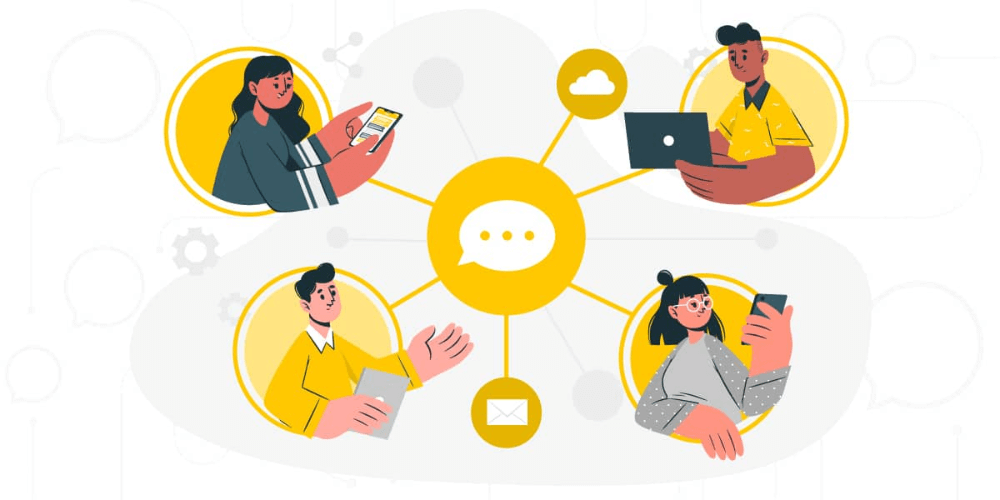
Omnichannel marketing sounds like a buzzword until you see what it does to revenue. When customers engage across multiple channels, they often spend more and stick around longer. In fact, a well-known study of 46,000 shoppers found that the more channels customers used, the more they spent. Therefore, the goal isn’t “be everywhere.” Instead, the goal is “connect the dots” so every channel supports the next step.
SMS, email, and social media each play a different role in that connected system. Email is your long-form storyteller and your owned archive. Social is your discovery engine and your attention builder. Meanwhile, SMS is your fast, high-visibility nudge that drives action when timing matters. Many industry summaries continue to cite very high SMS visibility and quick read times, which explains why SMS often works best as the “last-mile” channel in a journey.
So, how do you integrate SMS, email, and social without spamming people or creating messy overlaps? Below is a clean framework you can use to design coordinated campaigns, automations, and measurement across all three channels.
What Omnichannel Integration Actually Means
Omnichannel integration doesn’t mean sending the same message on three channels. Instead, it means coordinating:
- The role of each channel in the journey
- The timing between touches
- The data that controls who gets what
- The measurement that proves lift instead of noise
Additionally, omnichannel integration requires consistency. When your email promises one offer but your SMS says another, trust drops. Likewise, when social ads target people who already purchased, you waste spend and annoy customers.
Consequently, the best omnichannel programs share one central idea: one customer timeline, many channel expressions.
Why SMS Completes The Omnichannel Triangle
SMS works best when you treat it like a precision tool. Email can educate, persuade, and nurture over time. Social can attract and retarget at scale. However, SMS can close the loop when urgency or convenience is a factor.
That’s why many brands use SMS for:
- High-intent moments (cart, checkout, back-in-stock)
- Time-sensitive offers (flash sales, early access)
- Service moments (delivery updates, appointment confirmations)
- Two-way help (shipping, sizing, returns questions)
Moreover, benchmarks and reports increasingly emphasize that click-based metrics matter more than vanity metrics like opens. For example, Klaviyo’s benchmark reporting defines click rate as clicks divided by total recipients and notes that it excludes bot clicks when reporting. Therefore, when you integrate channels, you should focus on outcomes like clicks, conversions, and revenue per recipient—not just “engagement.”
Assign Clear Jobs To Each Channel
Before you build flows, assign a primary job to each channel. Otherwise, every channel will try to do everything, and your customers will feel chased.
Email’s Best Job: Education And Depth
Email wins when the message needs room: product benefits, brand story, comparisons, FAQs, long-form content, and multi-item merchandising. Additionally, email supports richer segmentation and easier browsing because customers can scroll, save, and search later.
So, use email to:
- Introduce collections and explain “why”
- Share guides, tutorials, and social proof
- Build trust before the first purchase
- Nurture post-purchase adoption and loyalty
Social Media’s Best Job: Discovery And Demand
Social wins at discovery, social proof, and repeated exposure. It also helps you reach new audiences and build lookalikes. Meanwhile, retargeting keeps your brand top of mind as customers browse other apps.
So, use social to:
- Spark interest with creative and UGC
- Drive opt-ins (email and SMS) from content
- Retarget browsers and engagers
- Amplify launches with reach and frequency control
SMS’s Best Job: Action And Resolution
SMS wins when you need action now or you need a quick answer. Therefore, use SMS for high-intent nudges, limited-time windows, and conversational support prompts.
So, use SMS to:
- Recover carts and checkouts
- Trigger back-in-stock and price-drop alerts
- Deliver short, urgent promotions
- Route questions and reduce friction fast
Now that each channel has a job, integration becomes much simpler because you stop competing with yourself.
Omnichannel programs break when data lives in silos. Therefore, you need a shared foundation that tracks identity and events across channels.
At minimum, unify:
- Customer identifiers (email, phone, customer ID)
- Consent status (email opt-in, SMS opt-in, preferences)
- Behavioral events (viewed product, add-to-cart, checkout start, purchase)
- Message history (last email, last SMS, last ad exposure if available)
Additionally, set universal suppression rules. For example, if someone buys, suppress promo SMS and aggressive retargeting for a short window. As a result, the experience feels respectful, and performance often improves because you reduce wasted touches.
Omnichannel Journeys That Integrate SMS, Email, And Social
The fastest way to design omnichannel integration is to build journeys around real customer moments. Below are four practical journeys you can implement quickly.
Journey 1: New Subscriber To First Purchase
Email sets expectations and educates. Social builds familiarity with UGC and creator content. Then SMS provides the “quick path” when the customer shows intent.
A clean sequence might look like this:
- Day 0: Social ad or organic post drives to sign up
- Day 0: Email welcome (brand story + best sellers)
- Day 1: Social retargeting with UGC/testimonials
- Day 1–2: SMS prompt only if they browsed or added to cart
Because you wait for intent, the SMS feels helpful rather than interruptive. Consequently, you increase conversions without increasing opt-outs.
Journey 2: Abandoned Cart Recovery With Channel Roles
Cart recovery works best when channels play different parts:
- Email: detail and reassurance (returns, shipping, reviews)
- SMS: urgency and speed (one link back to checkout)
- Social: retargeting with visuals that re-sell the product
So, you might run:
- 1–2 hours: Email cart reminder with benefits and proof
- 4–8 hours: SMS cart nudge with a single checkout link
- 24 hours: Social retargeting with UGC and dynamic product ads
Additionally, keep discounts as a last resort. Otherwise, customers learn to abandon carts to get offers. Therefore, lead with friction removal first, then test incentives only for offer-sensitive segments.
Journey 3: Product Launch Or Drop
Launches need hype, clarity, and speed. Therefore:
- Social creates anticipation and reach
- Email delivers the full story and merchandises the collection
- SMS provides early access and limited-time prompts
A clean launch rhythm:
- Tease on social (countdown, behind-the-scenes)
- Send launch email (collection, pricing, benefits, FAQs)
- Send SMS to VIPs first (early access link)
- Retarget social engagers who didn’t click or buy
Because the channels stack logically, customers don’t feel you’re repeating yourself. Instead, they feel guided.
Journey 4: Post-Purchase Retention And Review Flywheel
Retention improves when customers succeed with the product. So:
- Email delivers usage guides and care tips
- SMS checks in and routes support quickly
- Social reinforces identity and community through UGC
Then, once adoption happens:
- SMS asks for a quick rating by reply
- The email asks for a longer review or referral
- Social features customer content (with permission), which drives new demand
As a result, your channels feed each other instead of operating separately.
Timing Rules That Prevent Over-Messaging
Integration fails when customers get hit from every side at once. Therefore, you need timing rules that keep the experience calm.
Use three simple rules:
- Don’t send an SMS immediately after a promotional email unless there is an urgent need.
- Don’t run aggressive retargeting for recent purchasers.
- Don’t stack multiple channels in the same hour unless it’s transactional/service.
Additionally, treat SMS as the “interruptive” channel. Because it grabs attention fast, you should use it when it adds real value.
Many industry summaries emphasize SMS’s rapid visibility, supporting its use for time-sensitive moments rather than routine chatter.
Preference Management Makes Omnichannel Work Better
Customers don’t all want the same cadence. Therefore, let them choose.
A simple preference approach:
- Email: choose content type (guides, drops, deals)
- SMS: choose frequency (low vs standard) or category interest
- Social: retarget based on engagement signals and exclude opt-outs
When customers choose, they complain less. Consequently, deliverability and engagement improve across channels.
How To Measure Omnichannel Performance Without Fooling Yourself
If you measure each channel in isolation, you will misread results. For example, social media may “assist” a conversion that SMS closes. Meanwhile, email may educate while SMS captures the click.
So, measure in layers:
- Channel KPIs (click rate, conversion rate, unsubscribe rate)
- Journey KPIs (time to purchase, revenue per subscriber, repeat rate)
- Incrementality (holdout tests when possible)
Also, use consistent definitions. For instance, benchmark reports often define click rate as clicks divided by total recipients, which keeps comparisons fair across segments.
Finally, check opt-outs and complaint signals weekly. If your program grows but opt-outs rise, your integration is likely too dense or too repetitive.
A Practical 30-Day Integration Plan
You don’t need to rebuild everything at once. Instead, start with one journey and expand.
- Week 1: Foundation- Unify consent data, key events, and suppression rules. Then define channel jobs clearly.
- Week 2: Launch One Omnichannel Journey- Choose either cart recovery or welcome-to-first-purchase. Keep it simple and measurable.
- Week 3: Add Preference Capture- Add one SMS preference question and one email preference link. Then the segment sends accordingly.
- Week 4: Optimize Timing And Measurement- Adjust delays, reduce collisions, and set reporting for journey outcomes, not just channel clicks.
Because you build gradually, you avoid chaos and protect your list’s health.
Final Thoughts
Omnichannel marketing works when channels cooperate. Therefore, give email depth, give social reach, and give SMS urgency and resolution. Then, tie everything together with shared data, clear suppression rules, and measurements that reflect the full journey.
Most importantly, don’t aim for “more messages.” Instead, aim for better coordination. When you do that, customers feel guided, and performance improves naturally—because each channel shows up at the right time with the right job.