
📑Table of Contents:
- What “AI-Powered” Really Means In SMS
- Build The Foundation Before You Automate
- Shift From Demographics To Intent-Based Segmentation
- Use Next-Best-Action Logic To Personalize Without Giving Away Margin
- Optimize Send-Time And Frequency To Reduce Opt-Outs
- Prioritize Triggers Over Blasts For Faster Conversions
- Make SMS Conversational With AI And Route To Humans When It Matters
- Scale Copy And Testing Without Turning Your Brand Into A Spam Cannon
- Reduce Post-Click Friction With Better Paths To Purchase
- Keep Compliance And Trust At The Center
- Measure What Matters And Let AI Learn From Real Outcomes
- A Clean 30-Day Rollout Plan
- Final Thoughts

SMS works because it meets customers where attention already lives: on their phones. Still, attention alone doesn’t guarantee revenue. Many brands blast the same promo to everyone, then wonder why opt-outs climb, and conversions flatten. Fortunately, AI changes the game. With the right setup, you can predict intent, tailor offers, optimize timing, and automate journeys that feel helpful rather than pushy.
Even better, you don’t need a “perfect” tech stack to begin. Instead, you need clean data, thoughtful segmentation, and a testing mindset. From there, AI helps you scale the parts that usually break first: relevance, timing, and consistency.
What “AI-Powered” Really Means In SMS
AI in SMS marketing isn’t just copy generation. Rather, it’s a set of capabilities that improve decisions across the lifecycle:
- Prediction: who is likely to buy, churn, or respond today
- Personalization: which angle, offer, and CTA fit each customer
- Optimization: when to send, how often to send, and what to test next
- Automation: how to trigger messages from real behavior in real time
- Conversation: how to answer questions and remove purchase friction
Consequently, the best programs combine automation with restraint. You send fewer messages, but each one does more work.
Build The Foundation Before You Automate
Before you switch on AI features, tighten your inputs. Otherwise, your system will learn from messy signals and amplify weak decisions.
Start by organizing these essentials:
- Identity: phone, email, customer ID, timezone, language
- Consent: opt-in source, timestamp, proof, preferences
- Behavior: product views, add-to-cart, checkout starts, purchases, returns
- Value: AOV, LTV, margin bands, discount sensitivity
- Messaging history: last send, last click, last reply, opt-out risk
Next, standardize event naming. If one tool calls it checkout_started and another calls it begin_checkout, your triggers will misfire. Additionally, set up suppression rules so customers don’t receive conflicting messages in the same hour.
Shift From Demographics To Intent-Based Segmentation
Demographics can describe customers, but behavior predicts conversions. Therefore, segment around intent and timing rather than age ranges or broad interests.
Here are segments that consistently unlock higher conversions:
- High intent now: repeated product views, cart activity, pricing page revisits
- Offer-sensitive: converts primarily when incentives exist
- High-value repeaters: strong LTV, consistent purchase cadence
- Category explorers: first-time interaction with a key category
- Churn-risk: engagement drop after a period of consistency
- New subscriber warm-up: opted in recently, hasn’t purchased yet
Moreover, layer segments. For example, “high intent now + offer-sensitive” deserves a different message than “high intent now + high-margin buyer.”
Use Next-Best-Action Logic To Personalize Without Giving Away Margin
Personalization shouldn’t mean “discount everyone.” Instead, it should mean “choose the best move for this person right now.”
A clean next-best-action approach might look like this:
- High intent + high margin: nudge with clarity and speed, not a discount
- High intent + high uncertainty: add reassurance, proof, or an FAQ shortcut
- Medium intent + offer-sensitive: test a targeted incentive or bundle
- Low intent: educate, recommend, or invite preferences
As a result, you protect profit while still improving conversion rate.
Examples Of Next-Best-Action Texts
- High intent, no discount: “Your cart is saved. Want to finish checkout in one tap? [link]”
- High intent, reassurance: “Quick question—need sizing help or delivery timing? Reply with your question.”
- Offer-sensitive: “Complete your order in the next 2 hours and save 10% with TEXT10: [link].”
- Low intent, guidance: “Tell us what you’re shopping for: reply 1) Work, 2) Travel, 3) Everyday. We’ll send picks.”
Optimize Send-Time And Frequency To Reduce Opt-Outs
Timing matters more in SMS than in most channels because texts interrupt. So, aim for “helpful” timing, not “available inventory” timing.
AI can improve two levers quickly:
- Send-time optimization: identify when each user tends to click or buy
- Frequency management: prevent fatigue by capping messages intelligently
First, set quiet hours by timezone. Next, apply segment-level caps (new leads get fewer messages; loyal buyers can handle more). Then, move toward individual send-time optimization once you have enough history.
Meanwhile, watch opt-out spikes. If unsubscribes rise after campaign #3 in a week, AI shouldn’t “try harder.” It should slow down.
Prioritize Triggers Over Blasts For Faster Conversions
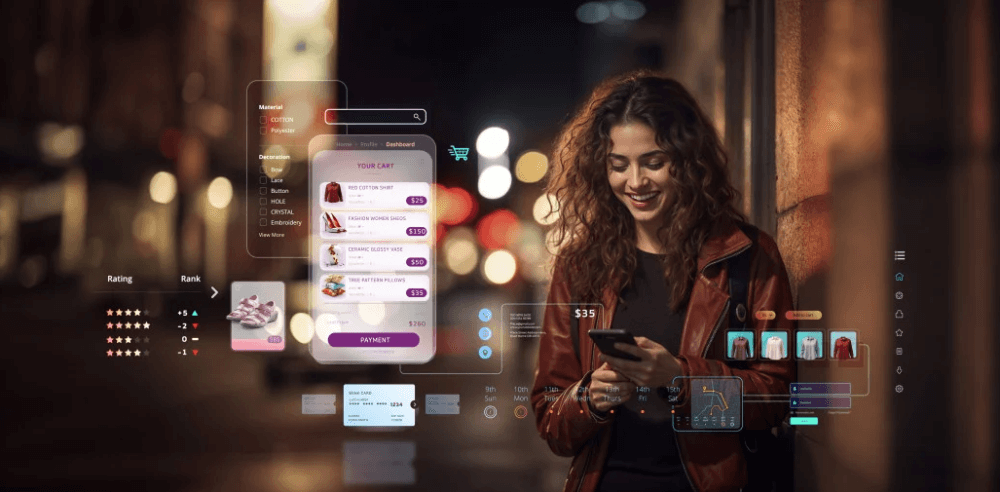
Broadcast campaigns can drive revenue, but triggers often convert better because they match a specific moment.
Start with these high-performing triggers:
- Browse abandon: 30–90 minutes after a product view
- Cart abandonment: 15–60 minutes after add-to-cart
- Checkout abandonment: 5–30 minutes after checkout starts
- Back-in-stock: immediately when inventory returns
- Price drop: immediately or as a daily digest
- Post-purchase cross-sell: 7–21 days later
- Winback: 45–90 days after last purchase
- Replenishment: timed to predicted re-order windows
Additionally, adjust cadence by intent. A checkout abandon message can arrive sooner than a browse abandon message, because intent is higher.
Make SMS Conversational With AI And Route To Humans When It Matters
Two-way SMS increases conversions by removing friction. Customers ask about shipping, fit, compatibility, setup, and returns. If you answer quickly, you close the sale. If you answer slowly, they leave.
Use AI to handle:
- FAQs and basic product guidance
- Order tracking and delivery updates
- Store hours, appointment scheduling, or availability checks
- Simple recommendations based on preferences
Then, escalate to a human when:
- The question becomes complex or emotional
- The customer shows frustration
- The bot’s confidence drops
- The order value is high
Furthermore, treat replies as a strong buying signal. A customer who asks a question is often closer to purchasing than a customer who only clicks.
Scale Copy And Testing Without Turning Your Brand Into A Spam Cannon
AI can generate dozens of variants quickly. However, volume without discipline will hurt trust.
So, build guardrails:
- Define voice: short vs playful, emoji rules, punctuation style
- Ban risky language: exaggerated claims, pressure tactics, sensitive inference
- Keep one primary CTA per message
- Rotate angles, not just synonyms
Then test in a structured way:
- Angle tests: urgency vs proof vs guidance vs curiosity
- Offer tests: free shipping vs % off vs bundle vs bonus item
- CTA tests: “Shop now” vs “See options” vs “Reply for help”
- Format tests: short direct vs two-line with benefit + CTA
Consequently, your AI becomes a testing engine, not a copy slot machine.
Reduce Post-Click Friction With Better Paths To Purchase
Clicks are a step, not the finish line. Therefore, remove every extra action after the tap.
Conversion-friendly tactics:
- Deep link directly to the cart or the exact product variant
- Pre-fill checkout when possible
- Use mobile-first pages with one clear CTA
- Offer “reply-to-choose” flows (reply 1/2/3) for simple funnels
- Keep load times tight and pages minimal
Also, keep your messages concise. Clean copy helps clarity, and clarity drives action.
Keep Compliance And Trust At The Center
Higher conversions come from trust. If customers feel tricked, they opt out. If they feel respected, they stay longer and buy more.
Do the basics consistently:
- Make opt-in clear and intentional
- Set expectations in the welcome message (content type + frequency)
- Include easy opt-out instructions when appropriate
- Honor opt-outs immediately
- Avoid sensitive personalization that feels invasive
Moreover, prefer relevance over volume. If you send fewer messages but increase the conversion rate, you still win.
Measure What Matters And Let AI Learn From Real Outcomes
If you optimize for clicks, you’ll get clicks. If you optimize for purchases and profit, you’ll build a real growth channel.
Track these core metrics:
- Conversion rate by segment, trigger, and send-time window
- Revenue per message and margin per message
- Opt-out rate, complaint rate, and reply sentiment
- Incremental lift using holdouts (so you know what truly worked)
- Time-to-conversion after a message is sent
Then, feed results back into your system. Over time, AI can identify which segments need offers, which need reassurance, and which need a timely nudge.
A Clean 30-Day Rollout Plan
You can slightly tweak the plan to suit your purposes.
Week 1: Set The Base
- Audit consent, preferences, and suppression rules
- Standardize event tracking
- Define 6–10 intent-based segments
- Establish baseline metrics
Week 2: Launch Core Triggers
- Cart abandonment and checkout abandonment flows
- Basic A/B tests on angles and CTAs
- Frequency caps by segment
Week 3: Improve Relevance And Timing
- Next-best-action rules to protect the margin
- Segment-level send-time optimization
- Cleaner deep links and landing pages
Week 4: Add Conversation And Measurement Rigor
- Two-way SMS for FAQs and pre-purchase questions
- Human escalation for high-value moments
- Holdout tests for incremental lift
- Expand triggers: back-in-stock, winback, replenishment

Final Thoughts
AI-powered SMS marketing drives higher conversions when it feels timely, personal, and genuinely helpful. So, start with intent-based segments, move quickly with triggers, and test angles with discipline.
Meanwhile, protect trust with clear consent and sensible frequency. When you combine these elements, SMS stops being “another campaign channel” and becomes a conversion system that improves with every send.