
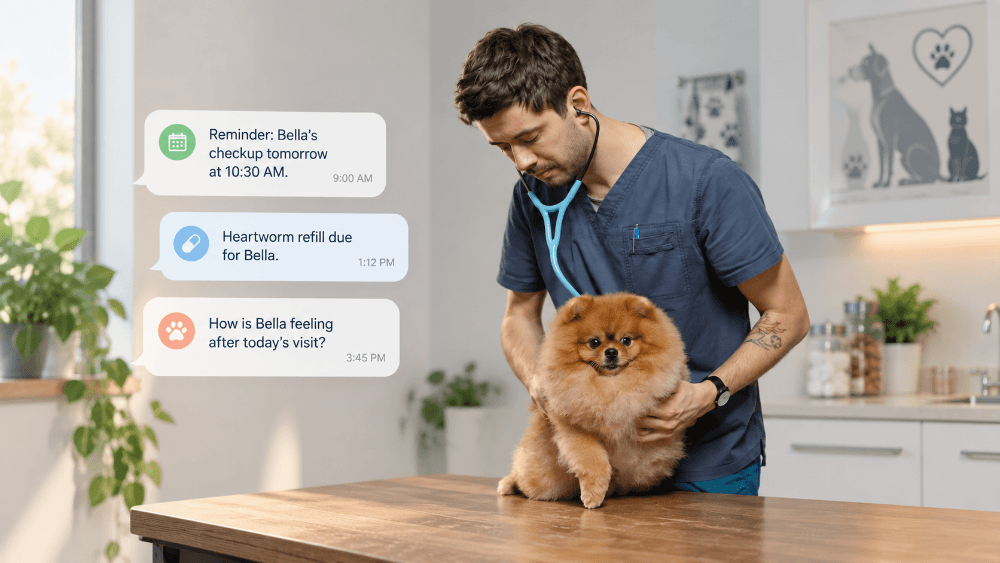
Veterinary clinics depend on timely communication. Pet owners need appointment confirmations, vaccination reminders, medication instructions, follow-up information, and updates about preventive care. However, phone calls often go unanswered, while emails can disappear inside crowded inboxes.
SMS provides veterinary practices with a faster, more convenient communication channel. Clinics can use text messaging to confirm appointments, remind owners about upcoming services, encourage preventive care, and follow up after visits.
Moreover, SMS can reduce repetitive administrative work when clinics integrate messaging with scheduling or practice management systems. The goal is not simply to send more texts. Instead, veterinary SMS marketing should deliver useful information at moments when pet owners need it.
Why SMS Works Well for Veterinary Clinics
Veterinary communication often involves short, time-sensitive information. Consequently, SMS suits many everyday interactions better than a long email or repeated phone call.
Veterinary practices can use texting for:
- Appointment confirmations
- Upcoming appointment reminders
- Vaccination notices
- Wellness exam reminders
- Prescription refill alerts
- Flea, tick, and heartworm prevention reminders
- Dental care campaigns
- Post-treatment follow-ups
- Surgery instructions
- Review requests
- Seasonal pet health alerts
Additionally, many pet owners appreciate communication they can read and answer without interrupting work or other activities.
The American Animal Hospital Association has highlighted the growing role of digital communication in veterinary practices, including appointment requests, refill requests, reminders, and ongoing client education.
However, clinics should still use phone calls or face-to-face communication when a case requires detailed discussion, emotional support, or complex clinical decisions. AAHA guidance notes that text-based communication can lack important context and may not suit every veterinary interaction.
Appointment Confirmations Can Reduce Scheduling Friction
Missed appointments create problems for both clinics and pet owners. Empty appointment slots reduce productivity, while late cancellations make it harder to offer those times to other patients.
Therefore, clinics can send an SMS confirmation immediately after booking.
For example:
“Hi Sarah, Max is scheduled at Green Valley Veterinary Clinic on Sept. 22 at 10:30 AM. Reply C to confirm or call us to reschedule.”
This message accomplishes several goals at once. It confirms the date, identifies the pet, names the clinic, and gives the owner a simple next step.
Furthermore, automated confirmations reduce the need for staff to make repetitive outbound calls.
Reminder Sequences Help Pet Owners Stay on Schedule
One reminder may not always be enough. Veterinary practices can create a sequence that contacts clients at several points before an appointment.
A simple SMS reminder workflow could look like this:
| Timing | SMS Purpose |
|---|---|
| At booking | Confirm appointment details |
| 7 days before | Send advance reminder |
| 24–48 hours before | Request confirmation |
| Day of appointment | Send time and arrival instructions |
| After missed appointment | Offer rescheduling |
Veterinary practice guidance has recommended text reminders as part of broader reminder strategies, especially for exams, vaccines, laboratory work, and preventive treatments.
Additionally, some clinics may benefit from sending wellness reminders earlier. One veterinary practice management recommendation is to contact clients well in advance of preventive services being due, so practices can offer more appointment availability.
As a result, SMS can support forward booking rather than only reacting when a pet becomes overdue.
Preventive Care Reminders Support Long-Term Pet Health
Veterinary care does not end after an annual exam. Pets may need vaccines, parasite prevention, dental care, lab testing, medication monitoring, or age-specific wellness services.
Therefore, SMS can help clinics remind owners about ongoing preventive needs.
Common campaigns may include:
- Annual wellness examinations
- Rabies and core vaccine reminders
- Heartworm testing
- Flea and tick prevention
- Dental examinations
- Senior pet bloodwork
- Prescription refills
- Nutrition consultations
For example:
“Bella is due for her annual wellness exam next month. Reply BOOK and our team will help you schedule.”
This type of message focuses on care rather than aggressive promotion.
Moreover, relevant reminders can improve client retention because the clinic remains involved in the pet’s ongoing health instead of contacting the owner only when something goes wrong.
Post-Visit Follow-Ups Improve the Client Experience
Follow-up communication can make veterinary care feel more personal.
After a routine appointment, the clinic might send a simple thank-you message. However, after a procedure or treatment, SMS can help check whether the pet is recovering as expected.
For example:
“Hi James, we’re checking on Luna after yesterday’s dental procedure. How is she doing today? Reply here or call us if you have concerns.”
This message gives the owner an easy way to reconnect.
Additionally, follow-up texts can include short reminders about medication schedules, feeding restrictions, wound monitoring, or upcoming rechecks once the veterinarian has already provided those instructions.
However, clinics should avoid diagnosing new problems through automated messages. If an owner describes unexpected symptoms, staff should move the conversation to an appropriate clinical channel.
Two-Way Texting Makes Veterinary Communication More Convenient
One-way reminders help, but two-way SMS creates additional value.
Pet owners may need to:
- Confirm an appointment
- Ask whether paperwork is required
- Request a refill
- Notify the clinic that they are running late
- Ask when a pet can eat before a procedure
- Request a callback
- Reschedule an appointment
Consequently, a shared clinic inbox can reduce voicemail volume and help staff respond more efficiently.
For example, if a client says they are running late, the clinic can quickly determine whether the appointment can still proceed. Veterinary workflow guidance has even recommended texting late clients to confirm whether they are still coming or need to reschedule.
Therefore, SMS can improve scheduling communication in both directions.
Segmenting Clients Makes SMS More Relevant
Not every pet owner should receive the same message.
A cat owner does not need a canine-specific campaign, while a puppy owner may need different information from someone with a senior dog.
Veterinary clinics can segment SMS lists based on factors such as:
- Species
- Age group
- Preventive care status
- Vaccination due dates
- Medication needs
- Recent procedures
- Appointment history
- Location
- Service type
For example, a clinic could send a dental-care reminder only to clients whose pets are due for an oral health assessment.
Likewise, clinics could send seasonal parasite-prevention messages to relevant patients instead of broadcasting the same message to the entire database.
As a result, segmentation can reduce unnecessary messaging and make each campaign more useful.
SMS Can Support Reactivation Campaigns
Some clients gradually stop scheduling preventive care even though their pets remain active patients.
SMS reactivation campaigns can help clinics reconnect with these owners.
For example:
“We haven’t seen Charlie recently, and he may be due for preventive care. Reply APPT if you’d like our team to help schedule a visit.”
AAHA has reported that veterinary practices experiencing slower appointment volumes have considered sending additional reminders to current clients to encourage them to visit.
However, reactivation campaigns should remain relevant and respectful. Constant promotional messaging may increase opt-outs rather than appointments.
Use SMS for Education, Not Just Promotions
Veterinary SMS marketing does not always need to sell a service.
Clinics can send useful seasonal information such as:
- Heat safety reminders
- Fireworks anxiety preparation
- Tick-season alerts
- Toxic food warnings
- Pet food recalls
- Holiday travel tips
- Severe-weather information
These messages can strengthen trust by providing value without immediately asking the owner to make a purchase.
Moreover, educational texts can link to a clinic article or resource page where owners can learn more.
Keep Veterinary SMS Messages Clear and Action-Oriented
Pet owners should understand the message within seconds.
A strong veterinary SMS usually includes:
- The clinic name
- The pet’s name when appropriate
- The reason for the message
- One clear action
- An opt-out method where required
For example:
“Green Valley Vet: Milo is due for a wellness exam in October. Reply BOOK to request an appointment. Reply STOP to opt out.”
Avoid unnecessary wording, multiple links, or several competing calls to action.
Furthermore, short messages may reduce SMS segment costs while making the text easier to scan.
Follow SMS Consent and Opt-Out Rules
Veterinary clinics must distinguish between operational communication and marketing.
Appointment-related texts may differ legally from promotional campaigns. However, businesses using automated marketing texts in the United States must pay close attention to TCPA requirements, including consent and opt-out rules.
FCC rules restrict certain automated calls and texts without appropriate consent, while telemarketing robotexts generally require prior express written consent. The FCC has also strengthened requirements around honoring revocation and opt-out requests.
Therefore, clinics should document consent, explain what clients are signing up for, clearly identify the practice, and process STOP requests promptly.
Additionally, practices should review applicable state laws and carrier requirements before launching promotional campaigns.
Track the Right Veterinary SMS Metrics
Clinics should measure more than message volume.
Useful SMS metrics include:
| Metric | What It Shows |
|---|---|
| Delivery rate | Whether texts reach valid numbers |
| Confirmation rate | How many clients confirm visits |
| Reschedule rate | Whether SMS helps recover appointments |
| Response rate | How often clients engage |
| Booking rate | How many reminders generate appointments |
| Opt-out rate | Whether messaging frequency feels excessive |
| Reactivation rate | How many inactive clients return |
Over time, clinics can compare reminder timing, wording, and campaign types.
For instance, a clinic may discover that a 48-hour reminder generates more confirmations than a same-day text. Consequently, the practice can adjust its workflow based on real client behavior.
Building a Better Veterinary SMS Strategy
The best veterinary SMS programs combine automation with human care.
Automated reminders can handle repetitive communication, while clinic staff focus on medical questions and more complex conversations. Additionally, segmentation can keep messages relevant, while two-way texting gives pet owners an easy path back to the practice.
Ultimately, SMS marketing for veterinary clinics works best when every message has a clear purpose.
Appointment confirmations reduce uncertainty. Preventive reminders support ongoing care. Post-visit follow-ups strengthen relationships. Meanwhile, educational messages can keep the clinic useful between appointments.
When veterinary practices combine thoughtful SMS automation with good consent practices and responsive staff, texting becomes more than a marketing tool. It becomes part of a stronger, more convenient client experience.