
SMS marketing once focused mainly on occasional promotions sent to an entire subscriber list. However, customers now expect brands to recognize their interests, respond to their actions, and communicate at useful moments.
SlickText supports this shift through automated customer journeys that connect subscriber data, behavioral triggers, personalized messages, segmentation, and two-way conversations. Instead of manually sending every welcome text, reminder, or follow-up, businesses can design workflows that guide customers through a series of relevant interactions.
As a result, SMS becomes more than a broadcasting channel. It becomes a tool for building relationships across the full customer lifecycle, from the first opt-in to repeat purchases and long-term loyalty.
What Is an Automated SMS Customer Journey?
An automated SMS customer journey is a planned sequence of messages and actions triggered by customer behavior, profile data, or timing.
For example, a journey might begin when someone joins a text list via a keyword or a website pop-up. The platform could then send a welcome offer, wait two days, check whether the subscriber clicked a link, and place that person on a different path based on the result.
SlickText describes automated texting as a way to send messages according to triggers, time intervals, and scheduled dates. Its automation tools support welcome messages, reminders, abandoned-cart texts, birthday offers, review requests, drip campaigns, and other personalized interactions.
Therefore, Businesses Can Create Journeys Around Goals Such as:
- Welcoming new subscribers
- Nurturing leads
- Recovering abandoned carts
- Increasing repeat purchases
- Collecting customer information
- Requesting reviews
- Re-engaging inactive contacts
- Supporting customers after a purchase
Drag-and-Drop Workflows Make Journeys Easier to Build
SlickText’s Workflows tool provides businesses with a visual, drag-and-drop environment to create automated customer journeys. Users can begin with a template or build a workflow from a blank canvas.
A workflow can send texts, collect information, update contact records, change inbox statuses, and perform other actions. Consequently, a business can manage both marketing communications and internal customer data updates in the same sequence.
A Basic Welcome Journey Might Look Like This:
| Journey Stage | Automated Action |
|---|---|
| Subscriber joins | Send a welcome message |
| Two days later | Share a popular product or service |
| Link clicked | Apply an interest-based segment |
| No purchase after five days | Send a helpful reminder |
| Purchase completed | Start a post-purchase journey |
Because each step follows a defined rule, the business can communicate consistently without requiring employees to manually monitor every subscriber.
Behavioral Triggers Make Messages More Timely
Timing often determines whether an SMS feels useful or intrusive. A generic promotion may not interest every subscriber, while a message connected to a recent action can feel highly relevant.
SlickText workflows can respond to customer behaviors such as page views, product views, cart activity, purchases, link clicks, and participation in workflows. Its ecommerce automation features also support Shopify-related conditions, including cart status and browsing sessions.
For example, a customer who leaves an item in a shopping cart could receive a reminder. Meanwhile, someone who already purchased that item could enter a separate sequence with delivery information, product tips, or a review request.
Therefore, behavioral automation helps businesses avoid sending the wrong message at the wrong stage of the journey.
Segmentation Creates More Relevant Paths
Automation alone does not guarantee relevance. Businesses also need to divide subscribers into meaningful groups.
SlickText allows marketers to build segments using profile data and real-time behavior. Available criteria can include location, age, opt-in source, birth month, cart value, order history, links clicked, purchases, and custom fields. Moreover, segments can update automatically as customer behavior changes.
A Retailer, for Instance, Could Separate Subscribers Into Groups Such as:
- New subscribers who have not purchased
- Customers who clicked a product category
- Buyers with an abandoned cart
- Repeat customers
- Subscribers with an upcoming birthday
- Customers who have not engaged recently
Consequently, each group can enter a different automated journey. A new subscriber may receive educational content, while a repeat buyer receives early access to a product launch.
Personalization Makes Automation Feel Less Mechanical
Automated journeys can quickly feel impersonal when every message uses identical wording. SlickText supports personalization through contact data, custom fields, and merge information. Businesses can address recipients by name and adapt content according to stored subscriber details.
Compare these two texts:
- “Your special offer ends tomorrow.”
- “Hi Mia, your 15% skincare offer ends tomorrow. Shop your favorites here: [link].”
The second version provides context and connects the offer to a known interest. However, brands should avoid inserting data simply because they have it. Personalization works best when it makes the message clearer, more convenient, or more useful.
Conversational Data Collection Improves Future Journeys
Customer profiles often contain limited information when subscribers first join. Therefore, SlickText includes tools for gathering additional data through SMS conversations.
The platform can use conversational data collection to ask subscribers questions and update contact information. SlickText also describes AI agents that can collect customer data while following a brand’s communication style.
For example, a fitness company might ask:
“What interests you most? Reply 1 for strength training, 2 for weight loss, or 3 for mobility.”
The answer can update the subscriber’s record and place that person into a more relevant journey. As a result, future messages can reflect genuine preferences rather than broad assumptions.
Autoresponders Provide Immediate Interaction
Customers often expect an instant response after texting a keyword, completing a form, or contacting a business outside working hours.
SlickText autoresponders can confirm signups, share offers, provide event details, answer common questions, or start a longer workflow. Additionally, the platform can use actions such as form submissions, link clicks, and after-hours messages as triggers.
For instance, a subscriber who texts “MENU” could immediately receive a restaurant menu and then enter a sequence that includes a welcome offer and a weekend reminder.
Therefore, autoresponders serve as useful entry points into broader customer journeys rather than functioning only as isolated automatic replies.
Two-Way Messaging Keeps the Journey Human
Not every customer interaction should remain automated. When someone asks a detailed question, requests assistance, or shows strong purchase intent, a team member may need to step in.
SlickText’s shared inbox supports private two-way conversations, internal notes, conversation assignments, tags, statuses, and automated inbox rules. Teams can also create after-hours replies or automatically close inactive conversations.
Consequently, automation can handle routine steps while employees focus on conversations that require judgment or empathy. This balance helps businesses scale customer communication without making customers feel trapped inside a rigid sequence.
Analytics Help Businesses Improve Every Step
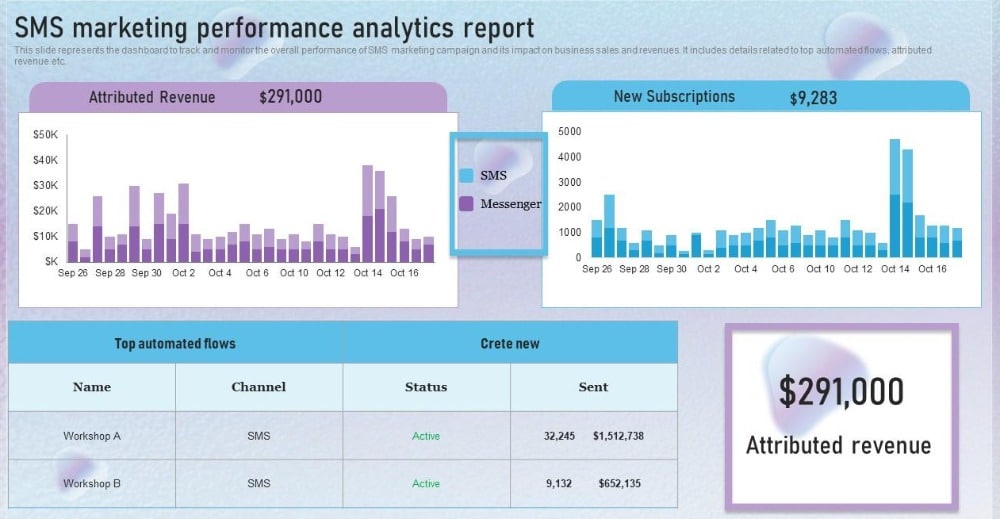
Automated journeys require ongoing evaluation. SlickText analytics cover campaign engagement, click-through rates, subscriber growth, workflow performance, response times, and revenue attribution.
Businesses can use this information to review:
- Which workflow steps generate clicks
- Where subscribers leave a journey
- Which messages cause opt-outs
- How quickly teams answer replies
- Which sequences contribute to revenue
- Whether one call to action outperforms another
Furthermore, SlickText supports automated A/B testing for variables such as message wording, calls to action, send times, and creative content. Therefore, marketers can improve journeys based on customer behavior rather than guesswork.
Why Automated SMS Journeys Continue to Grow
SlickText reflects a broader movement from one-time text blasts toward connected, behavior-driven customer experiences. Its workflows, real-time segmentation, personalization, autoresponders, integrations, conversational data collection, two-way inbox, and analytics help businesses communicate more intelligently at scale.
However, successful automation still depends on clear consent, sensible message frequency, relevant content, and easy opt-outs. Businesses should also review every workflow regularly so that outdated messages do not continue to run unnoticed.
Ultimately, automated SMS customer journeys work because they combine speed with relevance. When SlickText delivers the right message after a meaningful customer action, automation can strengthen engagement without sacrificing the personal quality that makes texting valuable.