

Travel agencies sell more than itineraries. They sell timing, trust, and confidence. A traveler may be comparing destinations, waiting on a quote, deciding whether to upgrade, or worrying about a last-minute change. In each of those moments, communication shapes the sale. If the agency responds too slowly, the traveler may book elsewhere. If the next step feels unclear, the trip may stall. And if updates arrive too late, the customer experience can fall apart quickly.
That is exactly why SMS marketing has become so valuable for travel agencies. Text messaging gives agencies a direct, mobile-first way to move travelers from interest to action. Moreover, travel planning continues to shift toward digital behavior. Global online travel bookings are projected to reach $1.2 trillion by the end of 2026, reflecting the continued shift toward online planning and booking experiences. At the same time, travel research continues to show that consumer expectations around convenience, personalization, and mobile-first engagement are rising.
However, good travel SMS marketing is not about sending constant promotions. Instead, it is about using texting at the moments where speed, clarity, and reassurance matter most. When agencies do that well, SMS can improve lead response, increase quote conversion, reduce booking friction, support traveler confidence, and strengthen loyalty across the full customer lifecycle.
Why SMS Works So Well For Travel Agencies
Travel decisions often happen in small windows. A traveler spots a fare, asks about availability, requests a package quote, or wants to confirm a detail before booking. Therefore, agencies need a channel that feels immediate without becoming overwhelming. SMS fits that need well because it is fast, visible, and easy to reply to.
Moreover, travel is emotional. Travelers often move between excitement and hesitation very quickly. One moment, they are ready to book. The next moment, they are comparing options, waiting on a partner’s approval, or worrying about price, flexibility, or logistics. As a result, agencies benefit from a channel that sustains momentum. A short text can answer a question, confirm the next step, or remind the traveler that the offer is still available.
Additionally, travel buying behavior continues to favor digital convenience. Industry research points to rising online booking activity, stronger mobile planning patterns, and greater demand for smoother digital experiences. Consequently, SMS no longer sits outside the travel customer journey. It increasingly fits right inside it.
Where SMS Delivers The Most Value
The best travel agency SMS programs usually focus on the places where quick communication changes outcomes.
High-Impact SMS Use Cases For Travel Agencies
- New lead and inquiry follow-up
- Quote delivery and quote follow-up
- Limited-time offer alerts
- Appointment or consultation reminders
- Booking confirmations
- Payment deadline reminders
- Pre-departure reminders and travel tips
- During-trip updates or support check-ins
- Post-trip review requests and loyalty follow-up
These use cases matter because they align with how travelers actually behave. A person requesting a honeymoon quote does not want to wait two days for acknowledgment. A family deciding on a vacation package may need one quick reminder before a deadline. A traveler with a confirmed itinerary may need reassurance before departure. So, texting works best where timing directly affects conversion or confidence.
SMS Can Improve Lead Response And Quote Conversion
One of the clearest reasons to use SMS in travel is the speed of lead response. When a traveler fills out a form, asks for a quote, or requests a consultation, the agency has a limited opportunity to hold that traveler’s attention. If the response comes too slowly, the traveler may move on to an OTA, another advisor, or a supplier site.
A quick text can solve that problem. It can confirm the inquiry, establish that a real person is handling it, and offer a simple next step. That matters because travel shoppers often compare several options before committing. Therefore, the agency that communicates clearly and quickly often gains a real edge.
For example, a strong first-response text can:
- Confirm receipt of the request
- mention the trip type or destination
- offer a consultation time
- ask one clarifying question
- set expectations for quote turnaround
This works because it reduces uncertainty right away. Instead of wondering whether anyone saw the request, the traveler sees momentum.
Likewise, quote follow-up is another natural SMS win. Many travel sales do not disappear because the traveler has completely lost interest. Often, they stall because life got busy, another decision-maker got involved, or the customer forgot to respond. A short text can reopen the conversation without the friction of a full email thread.
Promotions Work Better When Timing Is Tight
Travel promotions often depend on timing. A fare sale, cabin availability change, resort deal, or seasonal package becomes less compelling when the message arrives too late. Therefore, SMS is especially useful when the offer has a real deadline.
That does not mean agencies should turn texting into a nonstop discount feed. However, when there is a genuine reason to act quickly, SMS can carry that urgency more effectively than slower channels.
Strong Promotional SMS Use Cases
| Promotion Type | Why SMS Works Well | Best Outcome |
|---|---|---|
| Flash airfare or package offer | Time sensitivity is high | Faster clicks and inquiries |
| Low-availability group trip | Scarcity matters | Quicker deposits |
| Seasonal sale | Simple CTA works well | More consultation requests |
| Cruise cabin promotion | Deadline drives action | Faster quote follow-up |
| Upgrade offer | Decision window may be short | Higher booking value |
This matters because travel shoppers often need a push, not a long explanation. A short, well-timed text can provide that push without overcomplicating the message.
SMS Supports The Booking Process, Not Just The Sale
Many agencies make the mistake of using SMS only before booking. In reality, texting creates value throughout the entire travel journey.
Once a traveler books, there are still many moments where communication matters. Payment deadlines, document reminders, check-in guidance, and pre-departure information all affect the experience. Therefore, agencies can use SMS not just to close the sale, but also to protect it.
For example, texting works well for:
- deposit and final payment reminders
- passport or document prompts
- Itinerary availability notifications
- departure countdown reminders
- check-in or travel prep notes
These messages reduce friction. They also make the agency look organized and proactive, which strengthens trust before the traveler even leaves home.
During-Trip Texting Can Increase Trust And Loyalty
Travel agencies often talk about service, but travelers feel that service is most important during moments of uncertainty. A quick text before departure, a simple check-in during travel, or a timely update during disruption can make a huge difference.
This is where SMS becomes more than marketing. It becomes part of the customer experience.
A traveler waiting on a transfer detail, checking on a schedule change, or simply wanting reassurance may appreciate a fast text much more than a formal email. Moreover, travel trends continue to show that consumers care deeply about trust and support when choosing how and where to book. That means communication quality is not just operational. It is commercial too.
During-Trip SMS Examples
- airport or check-in reminders
- Itinerary change notices
- “Hope your trip is going smoothly,” check-ins
- emergency support prompts
- return-travel reminders
These messages should stay purposeful and helpful. When they do, they reinforce the agency’s value beyond the booking itself.
Post-Trip SMS Can Turn One Booking Into More Revenue
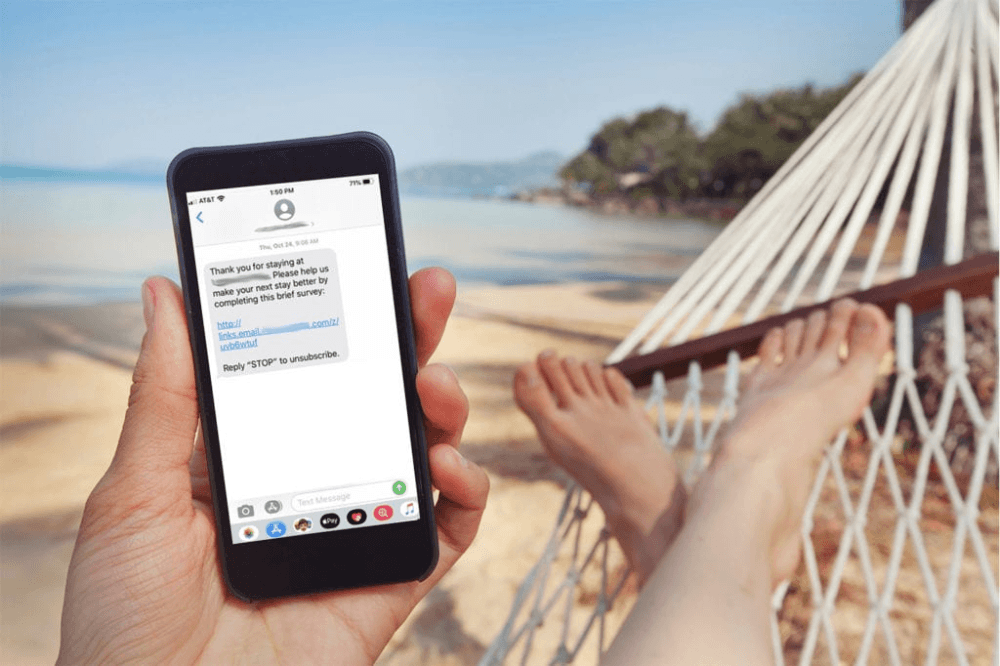
The relationship should not end when the traveler returns. Post-trip texting can help agencies request reviews, encourage repeat business, and identify future opportunities while the experience still feels fresh.
That matters because travel agencies often grow through repeat bookings, referrals, and loyalty. A short thank-you text, a review request, or a follow-up asking about the trip can create a stronger long-term relationship than silence after return.
A practical post-trip flow might include:
| Stage | SMS Goal | Example Outcome |
|---|---|---|
| Right after return | Thank the traveler | Stronger relationship |
| 1–3 days later | Request a review | More social proof |
| Later follow-up | Introduce next seasonal opportunity | Repeat booking potential |
| Loyalty stage | Offer VIP or repeat-traveler perks | Higher retention |
This structure works because it extends the journey without feeling pushy.
Segmentation Matters More Than Volume
Not every traveler should get the same text. A honeymoon lead, a cruise customer, a corporate traveler, and a family vacation client all need different communication. Therefore, segmentation matters as much in travel SMS as it does in retail or hospitality.
Useful segments include:
- destination interest
- trip type
- new lead vs. booked traveler
- luxury vs. budget traveler
- family vs. solo vs. couple travel
- group travel customers
- repeat customers
- inactive leads
Better targeting usually improves both response and trust. By contrast, generic texting can make the agency feel less personal and less relevant.
Compliance Still Matters
Travel agencies cannot treat promotional texting casually. The FCC states that commercial texts require prior express written consent, while informational texts may rely on different consent standards depending on the circumstances. The FCC also makes clear that consumers must be able to stop unwanted texts.
That means agencies should build texting programs around:
- clear opt-ins
- transparent expectations
- easy opt-out handling
- stored consent records
- separation between promotional and operational texts where appropriate
This is not just about legal caution. It also protects customer trust, which is central in travel.
Best Practices For Travel Agency SMS Marketing
Strong travel SMS works best when it feels timely and useful. Therefore, agencies should focus on relevance, not volume.
What To Do
- Respond quickly to new inquiries
- Keep messages short and action-oriented
- Use SMS where timing affects conversion
- Support booked travelers with clear reminders
- Segment by trip type and lifecycle stage
- Follow up after travel to build loyalty
What To Avoid
- Sending generic blasts without context
- Over-texting travelers with low-value updates
- Ignoring consent and opt-out rules
- Using SMS for long, complex itinerary explanations
- Letting quote requests sit too long before contact
These practices matter because texting works best when it feels useful, timely, and expected.
Final Thoughts
SMS marketing works for travel agencies because travel is full of moments when small delays can have big consequences. A text can turn an inquiry into a consultation, a quote into a booking, a booked trip into a smoother experience, and a satisfied traveler into a repeat customer.
In 2026, the best travel agencies will not use texting as a generic blast channel. Instead, they will use it to move travelers forward at the exact moments that matter most. That is where SMS becomes more than a communication tool. It becomes part of the booking experience itself.