
Omnichannel messaging sounds straightforward in theory. Brands should meet customers where they are, maintain consistent communication, and move them smoothly from one touchpoint to the next. However, in practice, many teams still run channels in silos. SMS gets treated as the urgent channel. Email becomes the long-form channel. WhatsApp handles conversations. RCS gets discussed as the rich messaging upgrade. Yet those labels only go so far. What actually drives results is not the channel by itself. It is the way channels work together.
That is why the real question is no longer whether a brand should use SMS, email, WhatsApp, and RCS. The better question is when SMS should work with them and when it should not. In 2026, the strongest messaging strategies do not push every campaign through every available channel. Instead, they assign each channel a role, coordinate handoffs, and let customer context determine what happens next.
Braze defines omnichannel marketing as a connected experience in which what a customer does in one place affects what they see next. That definition gets to the heart of the issue: omnichannel is not channel stacking. It is coordinated messaging.
Why SMS Still Matters In An Omnichannel World
SMS still holds a unique role because it is fast, direct, and hard to ignore. That makes it extremely useful for alerts, reminders, confirmations, urgent nudges, and high-intent moments. However, that does not mean SMS should carry every message on its own. In fact, the more complex the customer journey becomes, the more SMS benefits from support around it. Twilio’s guidance on email versus SMS frames the two channels in terms of their respective strengths, with SMS better suited to immediacy and email to depth and detail.
So, SMS works best as part of a system. It can spark attention, create urgency, or close a gap. Then, email can provide a fuller explanation, product details, policy information, or longer-form storytelling. Meanwhile, WhatsApp can support interactive, conversational follow-up, and RCS can deliver richer branded experiences within the native messaging environment. Therefore, SMS should often serve as an accelerator within a broader orchestration strategy rather than as the strategy itself.
Omnichannel Messaging Is Not Multichannel Messaging
This distinction matters more than many brands realize. Multichannel messaging means a brand shows up in more than one place. Omnichannel messaging means the channels actually share logic. In other words, the customer’s action in email, SMS, WhatsApp, or RCS changes what happens next across the system. Braze makes this distinction directly, and its 2026 omnichannel guide argues that customers increasingly expect brands to remember context from one touchpoint to the next.
That difference changes execution. A multichannel brand may send an email campaign, an SMS reminder, and a WhatsApp message around the same promotion without much coordination. An omnichannel brand, by contrast, will suppress the SMS if the email already drove a conversion. It may route a customer to WhatsApp if they show intent to converse. It may use RCS for a branded product carousel when the device and route support it. Consequently, the customer sees fewer repeated messages and more useful next steps.
When SMS Should Lead
SMS should lead when speed matters more than depth. That usually includes time-sensitive reminders, abandoned-cart nudges, limited-time alerts, appointment confirmations, security updates, shipping notifications, and quick calls to action. Because SMS arrives in a highly visible format, it often works best when the ask is simple, and the window for action is short. Twilio’s channel guidance supports this practical split between immediacy and detail.
Moreover, SMS should lead when the customer already knows the brand and needs only a small nudge to act. For example, a repeat customer who left items in a cart may not need a long explanation. They may just need a short reminder and a clear path back. Likewise, a customer with an upcoming appointment does not need a full email journey to confirm attendance. They need a fast, visible prompt. Therefore, SMS should lead when urgency, clarity, and low friction matter most.
When Email Should Support SMS
Email works best alongside SMS when the brand needs room to explain, persuade, educate, or document. It handles richer layouts, longer copy, multiple links, imagery, FAQs, and policy information far better than SMS does. Therefore, email should often do the heavier lifting when the offer needs context.
A smart pattern looks like this: email provides the full message, and SMS acts as the high-visibility follow-up. For example, a product launch email can explain the collection, feature benefits, and pricing tiers. Then SMS can remind subscribers that the launch is live or that early access closes soon. In other cases, SMS can come first to grab attention, while email follows with details. The right order depends on intent. However, the logic remains the same: SMS builds momentum, while email broadens the message.
Common SMS And Email Pairings
- Product launch email + SMS last-call reminder
- Long-form promotion email + SMS deadline alert
- Newsletter or education email + SMS action prompt
- Check out recovery email + SMS short reminder
- Transaction confirmation email + SMS update or next step
These combinations work because they reduce channel overload while matching message length to the right medium.
When WhatsApp Should Join The Journey
WhatsApp makes the most sense when the journey needs conversation, continuity, or a more app-like messaging experience. Meta’s business messaging documentation highlights welcome messages, conversation prompts, icebreakers, and bot commands inside WhatsApp business automation. That makes WhatsApp especially strong when a brand wants the customer to ask questions, move through guided support, or continue a dialogue rather than simply receive a one-way prompt.
Therefore, SMS should often hand off to WhatsApp when the customer signals that they need interaction rather than just information. A basic SMS might say, “Need help choosing the right plan? Reply for support,” while WhatsApp can handle the more detailed exchange. Likewise, SMS can alert a customer that support is available, but WhatsApp can manage the richer back-and-forth once the conversation starts. This matters because not every high-intent moment ends with a click. Sometimes it ends with a question.
Braze’s 2026 omnichannel guide also notes that its retail brands sent 10 times as many WhatsApp messages during the 2024 Black Friday/Cyber Monday period as the year before, and that 76% of those messages were multi-channel. That does not mean every brand should push hard into WhatsApp immediately. However, it does show that conversational channels are becoming more central in coordinated messaging strategies.
When RCS Should Upgrade The Experience
RCS fits best when a brand wants the benefits of messaging plus richer visual and interactive elements inside the native messaging app. Google’s RCS for Business materials describe branded business messaging flows, and its launch documentation centers brand verification as a prerequisite for going live. Recent release notes also show that Google continues to expand the verification workflow in 2026.
That matters because RCS can do more than standard SMS. It can support branded sender identity, richer media, interactive elements, and more polished customer experiences. So, RCS should work with SMS when the brand wants to upgrade a compatible journey without losing fallback coverage.
In practice, that means marketers should not treat RCS as a pure replacement for SMS. They should treat it as an enhancement layer for the right audience, while SMS remains the dependable baseline when rich support is unavailable.
A Simple Way To Decide Which Channel Should Do What
The easiest way to plan omnichannel messaging is to assign each channel a primary job.
| Channel | Best Role | Best For | Main Limitation |
|---|---|---|---|
| SMS | Fast attention and action | Reminders, urgent nudges, confirmations, short offers | Limited depth and branding |
| Detail and storytelling | Launches, education, long-form offers, receipts, policy info | Easier to ignore in crowded inboxes | |
| Conversation and guided help | Support, two-way messaging, assisted sales, service updates | Requires stronger conversational readiness | |
| RCS | Rich branded messaging | Interactive promos, richer journeys, branded native messaging | Availability and setup are more complex |
This framework helps by keeping teams from forcing every channel into the same role. Instead, each one contributes where it is strongest.
What Good Orchestration Actually Looks Like
A strong omnichannel journey does not simply send the same message four times. Instead, it adapts based on behavior. Here is a simple example:
- Email introduces a new product line with details and visuals
- SMS follows only for non-openers or high-intent browsers
- RCS upgrades the message for compatible users with branded rich content
- WhatsApp handles follow-up questions for customers who want help choosing
That is a coordinated system. It respects both the channel and the customer. Moreover, it prevents a common omnichannel mistake: repetition without progression. If each message just repeats the same call to action, the experience feels noisy. If each message advances the journey, the experience feels intentional.
Common Mistakes Brands Still Make
Even now, many teams weaken omnichannel performance through avoidable mistakes.
- They send the same offer through every channel without adjusting the format
- They fail to suppress messages after a conversion
- They use SMS for content that belongs in an email
- They force WhatsApp into one-way campaign behavior
- They treat RCS as universal instead of planning a fallback
- They optimize channels separately instead of optimizing the customer journey
These mistakes create fatigue quickly. More importantly, they make the messaging mix feel fragmented rather than connected. Therefore, the goal should not be maximum channel usage. The goal should be minimum friction across the journey.
Frequently Asked Questions
Should Every Campaign Use SMS, Email, WhatsApp, And RCS Together?
No. Omnichannel does not mean using every channel every time. It means using the right combination based on the message, the audience, and the next best action.
When Should SMS Come Before Email?
SMS should come first when urgency is high, and the action is simple. Email should come first when the customer needs more explanation before acting.
Is WhatsApp Better Than SMS For Marketing?
Not broadly. WhatsApp is often better for conversation and guided engagement, while SMS still wins on speed and straightforward reach. The best strategy often uses both for different jobs.
Should RCS Replace SMS In 2026?
Not completely. RCS is a meaningful upgrade for richer branded messaging, but SMS still plays a critical fallback and broad-reach role.
Final Thoughts
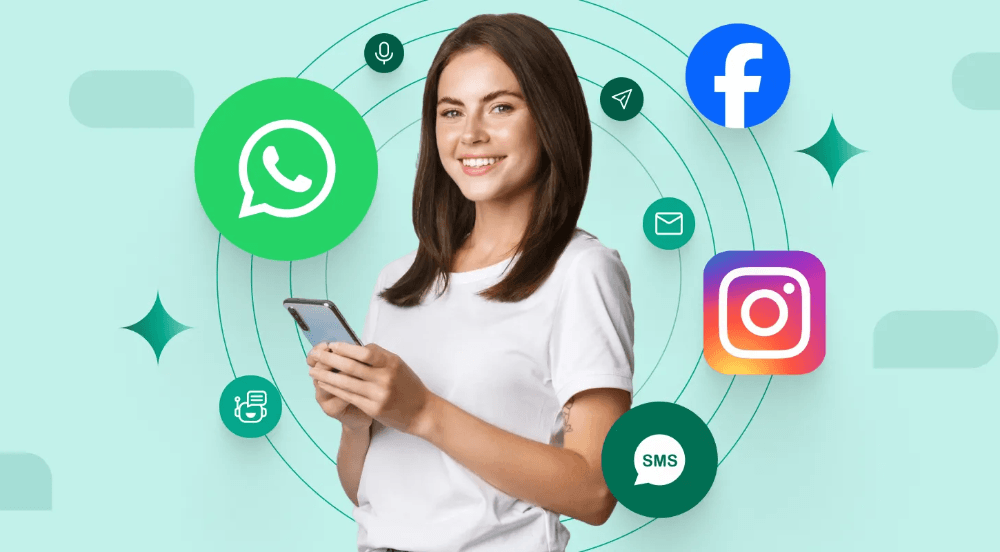
Omnichannel messaging works when brands stop asking which channel is best in general and start asking which channel is best for this moment. SMS should work alongside email, WhatsApp, and RCS, each addressing a different part of the customer journey. SMS grabs attention. Email builds understanding. WhatsApp supports dialogue. RCS upgrades the experience by enabling richer native messaging, removing friction.
That is the real opportunity in 2026. Brands do not need more channels for the sake of it. They need smarter orchestration. When the channels cooperate instead of compete, the customer feels remembered, the journey feels smoother, and the messaging performs better.