
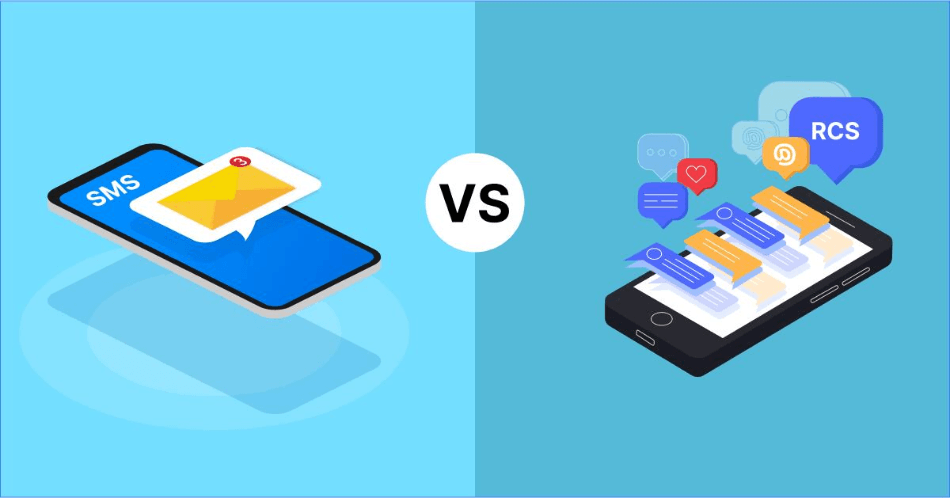
Marketers have spent years hearing that RCS would become the next big leap in mobile messaging. In 2026, that conversation feels more grounded. RCS is no longer just a future-facing concept. It is now a real channel with stronger standards, broader device support, richer business messaging, and more serious vendor backing. At the same time, SMS still delivers something RCS cannot fully replace: near-universal reach and operational simplicity.
So, should marketers upgrade?
The honest answer is yes, but not as a full replacement strategy. In 2026, smart brands should view RCS as an upgrade layer for the right audiences and use cases, while keeping SMS as the dependable fallback and baseline channel. In other words, this is not an RCS or SMS decision. It is an RCS-plus-SMS planning decision.
Why This Conversation Matters More In 2026
The case for RCS looks stronger now because the ecosystem has matured. Apple now supports RCS on iPhone as a carrier-provided service, and Apple says it supports texts, high-resolution photos and videos, links, delivery receipts, read receipts, and typing indicators when iMessage is not in use. Meanwhile, the GSMA finalized Universal Profile 4.0 in early 2026, which signals continued standardization across devices and networks. GSMA also said end-to-end encryption testing between Android and iOS devices is underway as part of the newer Universal Profile work.
That matters for marketers because the old objection to RCS was simple: “Great idea, not enough reach.” In 2026, reach is still not universal, but the addressable base is meaningfully better than it was when RCS lived mostly inside Android-only conversations. As a result, marketers can now treat RCS as a practical channel to test and scale, not just as an innovation slide in a strategy deck.
What RCS Actually Gives Marketers That SMS Does Not
RCS gives marketers a richer experience inside the native messaging app. Google’s RCS for Business documentation highlights branded and interactive experiences, while its message-building docs show support for rich cards, media, PDFs, suggested replies, and suggested actions. Twilio’s RCS documentation also emphasizes branded profiles, rich content, and read receipts.
That changes campaign design in a very practical way. With SMS, marketers usually rely on short text, a link, and concise copy. With RCS, they can present a branded sender, richer media, tappable actions, and more guided conversation flows inside the message itself. Therefore, RCS can reduce friction between attention and action. A customer can see the brand, understand the offer, and tap a response without jumping through as many hoops.
Moreover, RCS improves trust cues. Verified branding is one of its strongest advantages for business messaging. Google requires brand verification and launch approval before an agent can go live, and GSMA has long framed verified sender capabilities as a trust and fraud-reduction feature. For marketers dealing with phishing anxiety, fake senders, or low-confidence links, that branding layer matters a lot.
What SMS Still Does Better
SMS still wins on ubiquity, resilience, and simplicity. It does not depend on RCS capability, brand launch approval, or richer client support. In contrast, Google’s RCS docs state that if a user’s device does not support RCS or does not have it enabled, the platform returns a 404 NOT_FOUND, and brands should use fallback methods defined in their infrastructure. For critical messages, Google explicitly recommends initiating a fallback method.
That is why SMS remains indispensable for marketers. If the message must reach the broadest possible audience, SMS still provides the safest default. It also remains easier to operationalize for basic alerts, one-time campaigns, reminders, and broad-reach promotions. While RCS adds experience, SMS still anchors reliability.
In addition, SMS often keeps planning simpler. Teams already understand opt-in flows, copy limits, compliance review patterns, and reporting structures around SMS. RCS introduces more creative possibilities but also requires more asset planning, launch approvals, fallback logic, and channel orchestration. Consequently, some teams may underestimate the operational lift required for a good RCS program.
Marketers Should Not Expect A Full RCS Replacement Yet
One of the biggest mistakes brands can make in 2026 is assuming that iPhone support means universal readiness. Apple’s support page is clear that RCS is carrier-provided. In practice, that means availability still depends on carrier support and device condition, not just on whether someone owns an iPhone. So, while the Apple shift meaningfully improves the RCS story, it does not eliminate fragmentation.
Therefore, marketers should stop asking, “Can RCS replace SMS?” and start asking, “Where should RCS sit in our messaging mix?” That shift in thinking leads to better execution. Instead of forcing an all-or-nothing rollout, brands can use RCS where richer engagement adds measurable value, then rely on SMS for broad coverage and guaranteed continuity.
Cost Is More Nuanced Than Many Marketers Expect
Some marketers assume RCS will either be much more expensive because it is richer or much cheaper because it feels more modern. The reality is more nuanced. Twilio’s U.S. pricing page currently lists outbound SMS starting at $0.0083 and outbound RCS Rich also starting at $0.0083. However, Twilio also notes carrier fee complexity across messaging channels, and its January 2026 help update says T-Mobile increased pass-through fees for SMS, toll-free, short code, and RCS traffic.
That means marketers should not evaluate RCS based solely on message price. They should evaluate it on total economics: creative production, onboarding, brand verification, orchestration, fallback SMS volume, and expected lift in clicks, conversions, or customer experience. In many cases, RCS makes the most sense when richer messages can replace a landing-page detour or raise conversion efficiency enough to justify the added planning.
Compliance Still Matters Just As Much
RCS may feel like a more modern channel, but it does not free marketers from consent and compliance obligations. Google’s RCS for Business Acceptable Use Policy requires transparent notice about data use and requires consent for business-to-consumer messages. Meanwhile, the FCC states that robocalls sent with an autodialer generally require prior consent, and commercial texts require written consent. The FCC’s one-to-one consent rule, which took effect in January 2025, further tightened the requirements for obtaining prior express written consent from each seller.
So, before upgrading, marketers should treat RCS as a channel expansion rather than a compliance shortcut. Consent records, opt-out handling, message relevance, and internal governance still matter. In fact, because RCS enables richer, more conversational experiences, teams should be even more disciplined in their use-case design and in managing user expectations.
The Best Use Cases For RCS In 2026
RCS works best when rich content or guided interaction clearly improves the user journey. Product discovery, order updates with branded trust signals, appointment confirmations with action buttons, loyalty offers, and customer service flows all fit well. Google’s RCS for Business materials explicitly describe goals ranging from simple notifications to more complex flows, such as booking experiences, that use rich cards, media, and suggestions to guide conversations.
By contrast, SMS still fits best for universal alerts, basic promotions, low-complexity reminders, and critical fallback scenarios. That is especially true when the message only needs a short line of text and a reliable path to the handset. Therefore, marketers should not upgrade every SMS campaign to RCS. They should upgrade the campaigns where branding, interactivity, and reduced friction create real lift.
What Marketers Should Do Before Upgrading
First, audit your current SMS program. Look at your highest-value campaigns, your click paths, and your strongest conversion bottlenecks. Then identify where a branded, interactive message could improve performance. This step matters because RCS should solve a business problem, not just satisfy curiosity.
Next, plan for fallback from day one. Google’s documentation is explicit about unsupported or disabled RCS scenarios, and that alone makes fallback architecture non-negotiable. If your provider supports both channels, build the logic before launch, not after the first missed send.
Then, prepare for verification and launch workflows. Google says brand verification is a prerequisite for launch, and launch approval may involve Google, carriers, or both. That means RCS should not be treated like a same-day switch you flip after a brainstorm.
Finally, set realistic success metrics. Do not judge RCS only by open logic inherited from email. Instead, focus on conversion rate, action completion, customer trust, read signals where available, and whether richer messages reduce drop-off. Because RCS can shorten the path from message to action, its value often shows up in journey efficiency rather than in vanity metrics alone.
Final Verdict
In 2026, RCS is finally important enough that marketers should pay close attention. Apple’s support, GSMA’s ongoing standardization, richer business messaging features, and stronger vendor support have all pushed RCS into the mainstream planning conversation. Still, SMS remains essential because reach, fallback reliability, and operational simplicity still matter.
So, what should marketers do before upgrading? Upgrade selectively. Keep SMS as your baseline. Add RCS where branded trust, interactivity, and richer conversation design can improve performance. That approach is both realistic and future-ready, which is exactly what a good 2026 messaging strategy should be.