

The customer journey does not end when someone places an order. In many cases, that moment creates the best opportunity to learn, improve, and build a stronger relationship.
After a purchase, customers often have fresh impressions about the product, the checkout experience, the delivery process, and the brand as a whole. Because of that, post-purchase communication can reveal what worked, what caused friction, and what will influence future buying decisions. Reviews help build trust. Feedback helps uncover problems. Surveys help brands understand motivations and preferences. Together, these insights can improve both customer experience and long-term growth.
However, collecting that information is not always easy. Email inboxes fill up quickly. Long survey forms feel like work. Generic review requests often arrive too late or ask too much. As a result, many brands struggle to get enough useful responses.
SMS offers a more direct path.
Text messaging gives brands a fast, familiar, and low-friction way to connect with customers after the sale. It fits naturally into daily behavior and makes small requests easier to answer. Instead of sending a long email that asks for a review or survey response, a brand can send a short message with one clear action. That simplicity matters because customers are far more likely to respond when the effort feels small.
More importantly, SMS works especially well after a purchase because the experience still feels recent. A customer can quickly rate an order, share a reaction, leave a review, or answer a short survey without setting aside much time. Therefore, when brands use SMS carefully, they can gather better post-purchase insights while keeping the experience convenient for customers.
That said, success depends on more than just sending a text. Timing matters. Message length matters. Tone matters. Consent matters too. So, if you want SMS to improve your review strategy and feedback loop, you need a thoughtful approach.
Why SMS Works Well After the Purchase
SMS works well after a purchase because it removes friction. Customers do not need to search through an inbox, log in to a portal, or read a long message before acting. Instead, they receive a simple prompt in a channel they already use every day.
That convenience makes a major difference. After a purchase, customers usually do not want to spend several minutes filling out a form unless the experience was extremely good or extremely bad. However, they may be willing to tap a link, answer a short question, or provide a quick rating. SMS supports exactly that kind of lightweight interaction.
Additionally, the channel feels immediate. A post-purchase message sent at the right time can catch the customer while the experience still feels fresh. That timing often leads to more honest and more useful responses. If you wait too long, the customer may forget the details. On the other hand, if you ask at the right moment, you can capture real impressions while they are still clear.
SMS also supports conversational follow-up. That is especially helpful when the goal is not just to collect a rating, but also to understand the reason behind it. For example, if a customer gives a low score, the brand can follow up quickly and ask what went wrong. As a result, SMS can help brands gather insight and recover trust at the same time.
The Difference Between Feedback, Reviews, And Surveys
Many brands group feedback, reviews, and surveys together. Although they overlap, each one serves a different purpose. As a result, your SMS strategy should treat them differently.
Customer Feedback
Customer feedback helps brands understand the experience from the customer’s perspective. It usually stays private, and it often focuses on what happened during the buying, delivery, or product experience.
For example, you might ask:
- How satisfied were you with your order?
- How was your delivery experience?
- Did the product meet your expectations?
These questions help you identify pain points early. Moreover, they create space for customers to raise concerns before frustration grows into churn or public criticism.
Review Requests
Review requests ask customers to share public feedback on your website, Google, or another review platform. These messages help build credibility and social proof.
Unlike private feedback, reviews influence future buyers. Therefore, they matter not only for customer insight, but also for conversion. A strong review base can make your product or service feel more trustworthy.
However, review requests require care. You should ask for honest opinions, not just positive ones. Otherwise, the request feels manipulative and weakens trust.
Post-Purchase Surveys
Post-purchase surveys go deeper than a simple rating or review ask. They help brands understand why the customer bought, what nearly stopped the purchase, how they discovered the brand, and what could improve.
For example, a survey might ask:
- What made you choose this product?
- How did you hear about us?
- What almost stopped you from buying?
- What should we improve?
These answers can shape marketing, product development, customer experience, and retention strategy. Therefore, surveys work best when brands want richer insight rather than a quick reaction.
Why Timing Shapes Results
Timing often determines whether a customer responds at all. Even a well-written SMS request can fail if it arrives at the wrong moment.
For example, a review request sent immediately after checkout usually feels premature. The customer has not received the item yet, so they do not have enough experience to leave a meaningful review. On the other hand, a delivery feedback request sent weeks later may feel disconnected because the moment has already passed.
That is why timing should match the purpose of the message.
If you want delivery or service feedback, ask soon after the experience ends. If you want product feedback, wait until the customer has had enough time to use the item. If you want a review, make sure the person has enough real experience to write one honestly. Likewise, if you want survey data about the buying journey, ask while the reasons behind the purchase still feel clear.
In other words, good timing respects the customer’s experience. It also improves response quality because the request feels natural rather than forced.
How To Use SMS For Customer Feedback
Customer feedback messages should feel simple, direct, and helpful. The goal is not to impress the customer with polished copy. Instead, the goal is to make honest input easy.
A strong feedback text usually asks one clear question. That question should focus on the customer’s recent experience. For example, a restaurant might ask about pickup, a clinic might ask about the appointment, and an e-commerce brand might ask about order satisfaction.
Here are a few examples:
- Thanks for your order. How was your experience? Reply 1 to 5.
- Your package was delivered today. How did everything go?
- We’d love your feedback. Was your recent service experience satisfactory?
These messages work because they reduce effort. They also feel relevant to the moment.
Additionally, SMS feedback requests can uncover issues before they become larger problems. If a customer replies with a low score, your team can respond quickly, learn what happened, and take action. As a result, feedback messages often help with both insight and service recovery.
How To Use SMS For Review Requests
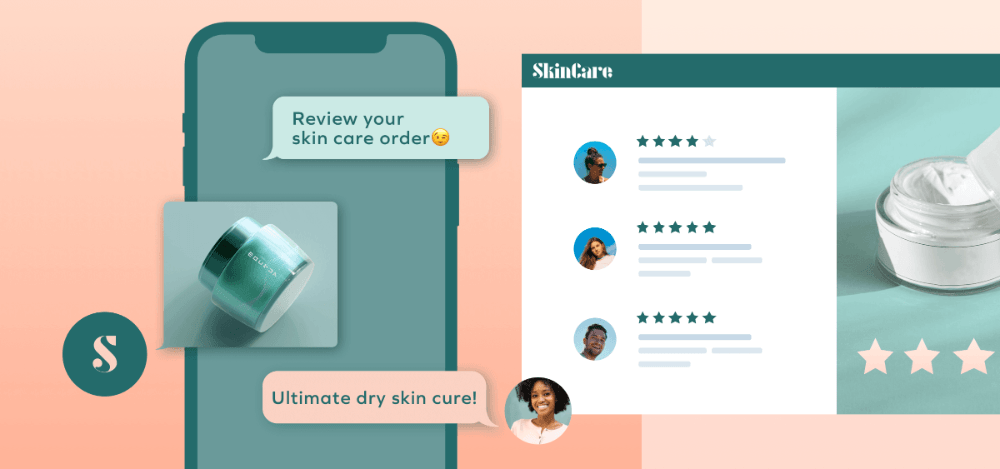
Review requests need a slightly different approach because they ask the customer to take a more public step. Therefore, the message should feel transparent, respectful, and easy to act on.
First, only ask for a review after the customer has had enough time to use the product or evaluate the service. Second, keep the message short. Third, make the destination clear.
For example:
- How are you liking your recent purchase? Leave a quick review here: [link]
- Thanks for shopping with us. We’d love your honest review: [link]
- Enjoying your order? Share your experience here: [link]
These messages work best when they ask for honesty rather than praise. That distinction matters because customers can sense when a brand only wants positive feedback. In contrast, a straightforward request feels more credible.
Also, avoid making the review process difficult. If the link leads to a long form or requires multiple extra steps, fewer customers will complete it. So, keep the path as short as possible.
How To Use SMS For Post-Purchase Surveys
Surveys can reveal valuable information, but they require more effort than a rating or review. Because of that, SMS survey requests should set clear expectations right away.
If the survey is short, say so. If it takes two minutes, mention that. If it asks only one question, make that obvious. This kind of framing reduces uncertainty and makes the request feel more reasonable.
For example:
- Quick question: what made you choose us? Take this 1-minute survey: [link]
- We’d love your input. Please answer this short 2-minute survey: [link]
- Tell us about your experience in one quick survey: [link]
Survey texts work best when they focus on a clear purpose. Do not ask ten broad questions just because you have the chance. Instead, decide what you actually want to learn. Then build a short survey around that goal.
For instance, if you want to understand acquisition, ask how the customer found you. If you want to understand hesitation, ask what nearly stopped the purchase. If you want to improve onboarding, ask where the experience felt unclear.
In short, the strongest SMS surveys stay focused.
Best Practices For Better Response Rates
If you want stronger results from SMS feedback and review campaigns, a few best practices matter more than the rest.
Keep The Ask Small
Customers respond more often when the request feels easy. Therefore, start with one simple action. Ask for a score, a short reply, or a quick tap to a short form.
Make The Message Relevant
Every text should connect clearly to the customer’s recent experience. Generic messages feel forgettable. By contrast, specific messages feel timely and useful.
Use A Conversational Tone
SMS should sound human. So, avoid stiff or overly formal language. A natural, direct tone often performs better because it feels more personal.
Respect The Customer’s Time
Do not send long messages or link to long forms unless the value clearly justifies the effort. In most cases, shorter requests lead to better participation.
Follow Up Thoughtfully
If a customer responds with a problem, do not ignore it. Instead, treat that response as an opportunity to learn and repair the relationship.
Make Space For Negative Feedback
Many brands focus heavily on positive reviews. However, negative feedback often teaches more.
When customers have a poor experience, private SMS feedback gives them a simple way to speak up. That matters because not every unhappy customer wants to post publicly first. Some want the brand to listen and respond.
Therefore, make it easy for customers to share honest feedback, even when it is not flattering. If someone gives a low rating, follow up respectfully. Ask what went wrong. Then look for patterns across responses. You may uncover delivery problems, product confusion, support gaps, or pricing concerns that would otherwise remain hidden.
In that sense, negative feedback is not a threat. It is a source of operational insight.
Stay Compliant And Transparent
SMS works best when customers trust the brand behind the message. That is why compliance and transparency matter so much.
First, make sure you have clear consent to send business text messages. Customers should know what they are signing up for and how to opt out. Just as importantly, opt-out instructions should remain simple and easy to follow.
Second, be honest in review collection. Ask for honest feedback, not only positive feedback. Do not pressure people into leaving glowing reviews, and do not design the process to filter out dissatisfied customers unfairly.
Third, be careful with incentives. If you offer something in exchange for a review or survey response, disclose it clearly and ensure the practice complies with the rules that apply to your market and platform.
Transparency protects trust. It also protects the quality of the data you collect.
What Brands Should Measure
You should not judge your SMS feedback strategy by send volume alone. Instead, look at the outcomes that show whether the program is actually useful.
Important metrics include:
- response rate,
- review completion rate,
- survey completion rate,
- average satisfaction score,
- complaint themes,
- repeat purchase rate after feedback recovery,
- unsubscribe rate.
These metrics tell you whether your messages are timely, clear, and valuable. For example, a high click rate with low survey completion may indicate that the survey is too long. A low response rate may indicate poor timing or unclear messaging. Meanwhile, a high unsubscribe rate may suggest that the requests feel too frequent or not relevant enough.
Therefore, measurement should guide improvement, not just reporting.
Common Mistakes To Avoid
Brands often weaken post-purchase SMS programs in predictable ways.
First, they ask too early. Customers cannot review a product they have not used. Second, they ask too much. Long forms and vague requests reduce participation. Third, they treat feedback, reviews, and surveys as the same thing.
That leads to poorly matched messages. Fourth, they ignore negative feedback instead of learning from it. Finally, they forget that SMS is a personal channel and overload customers with too many messages.
Fortunately, these mistakes are easy to fix. Use better timing, simplify the request, match the message to the goal, and keep the experience respectful.
Final Thoughts
SMS can become one of the most effective post-purchase channels a brand uses. It helps collect customer feedback, generate honest reviews, and power post-purchase surveys in a way that feels quick and convenient.
More importantly, it gives brands a chance to keep learning after the sale. That learning matters because it improves products, messaging, support, and customer experience over time.
The key is to stay intentional. Ask at the right moment. Keep the request short. Use a natural tone. Welcome honest input, not just praise. Then turn those responses into action.
When brands follow that approach, SMS becomes more than a follow-up tool. It becomes a smarter way to understand customers after they make a purchase.